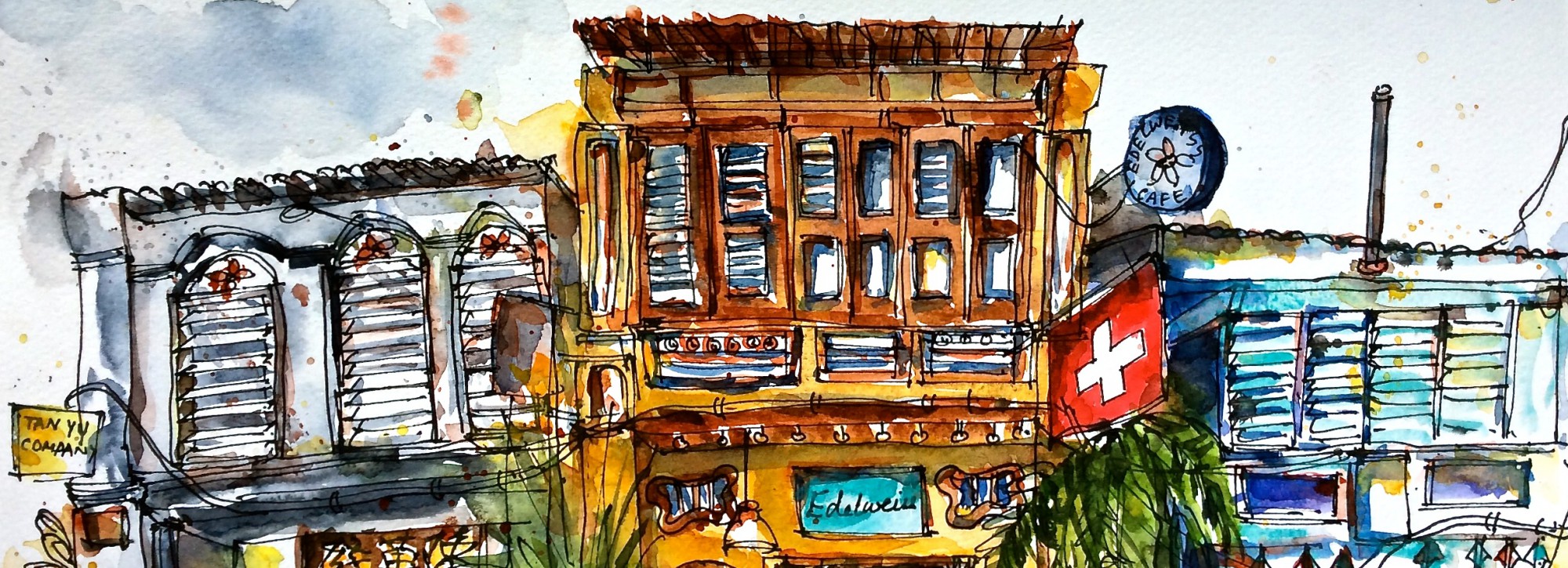

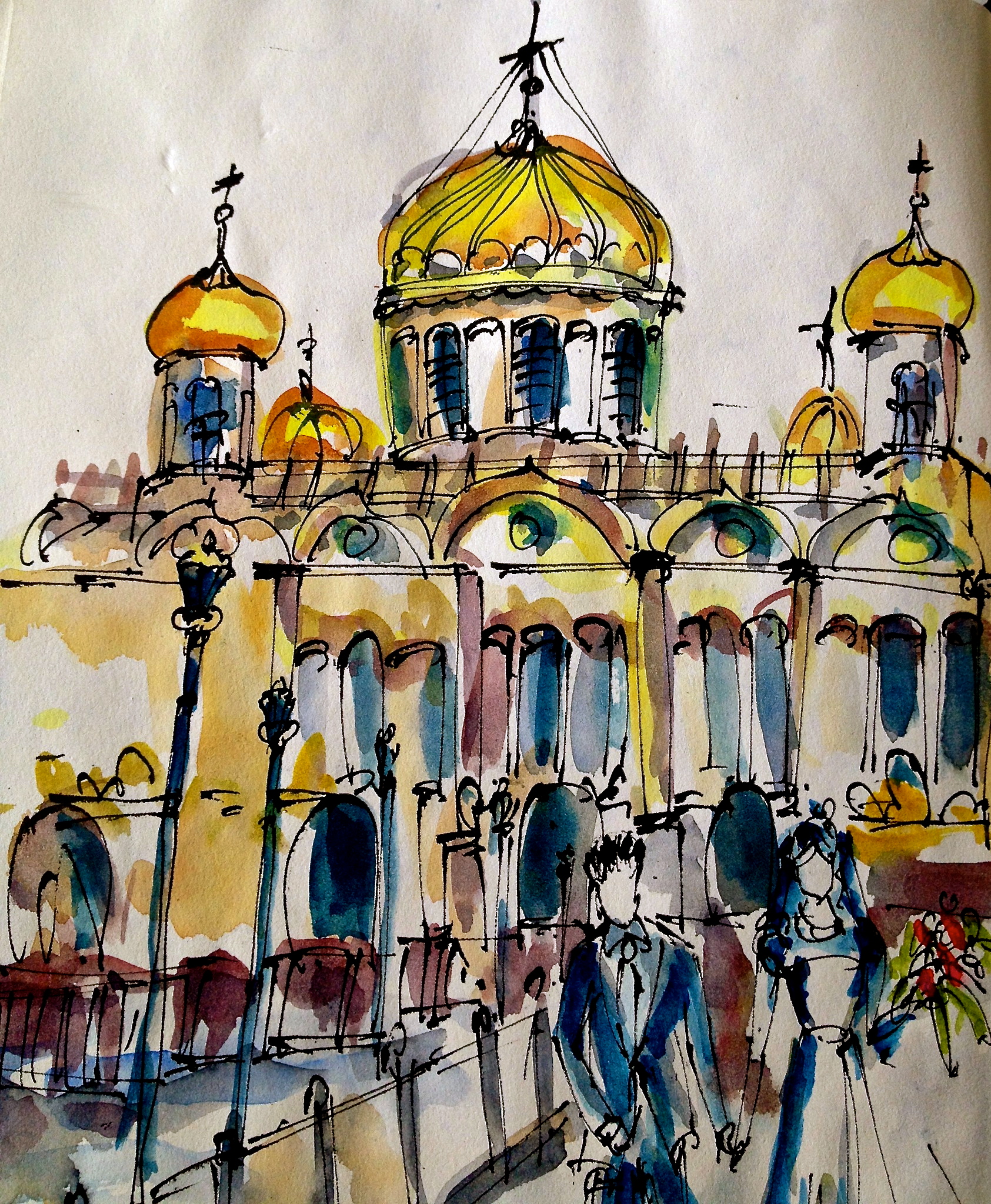
A random church on Moscow streets that begged to be sketched
I have often come across travellers wanting to pursue non-touristy trails in the most touristy places of the world, their penchant for seeing and experiencing things that are outside of the ‘Top 10 things to visit in a country’ , their heart’s nagging desire to make a personal connection, their search for an icon, an image, a flavour, a sentiment and ultimately a truth that hasn’t been projected on them by the media. I know these people, because I am one of them.
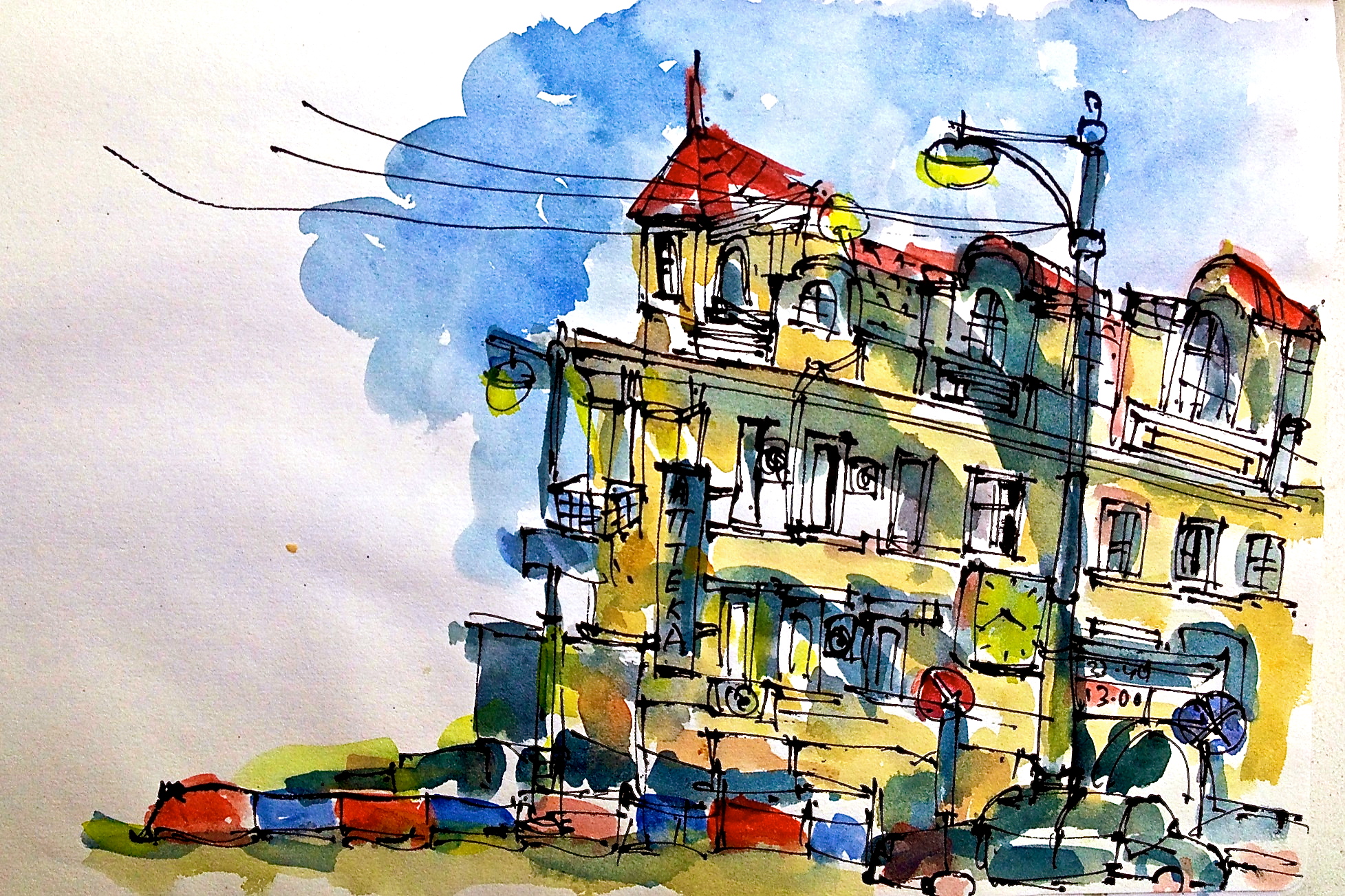
A busy crossing near Belorussky Vokzal, sketched from a local cafe
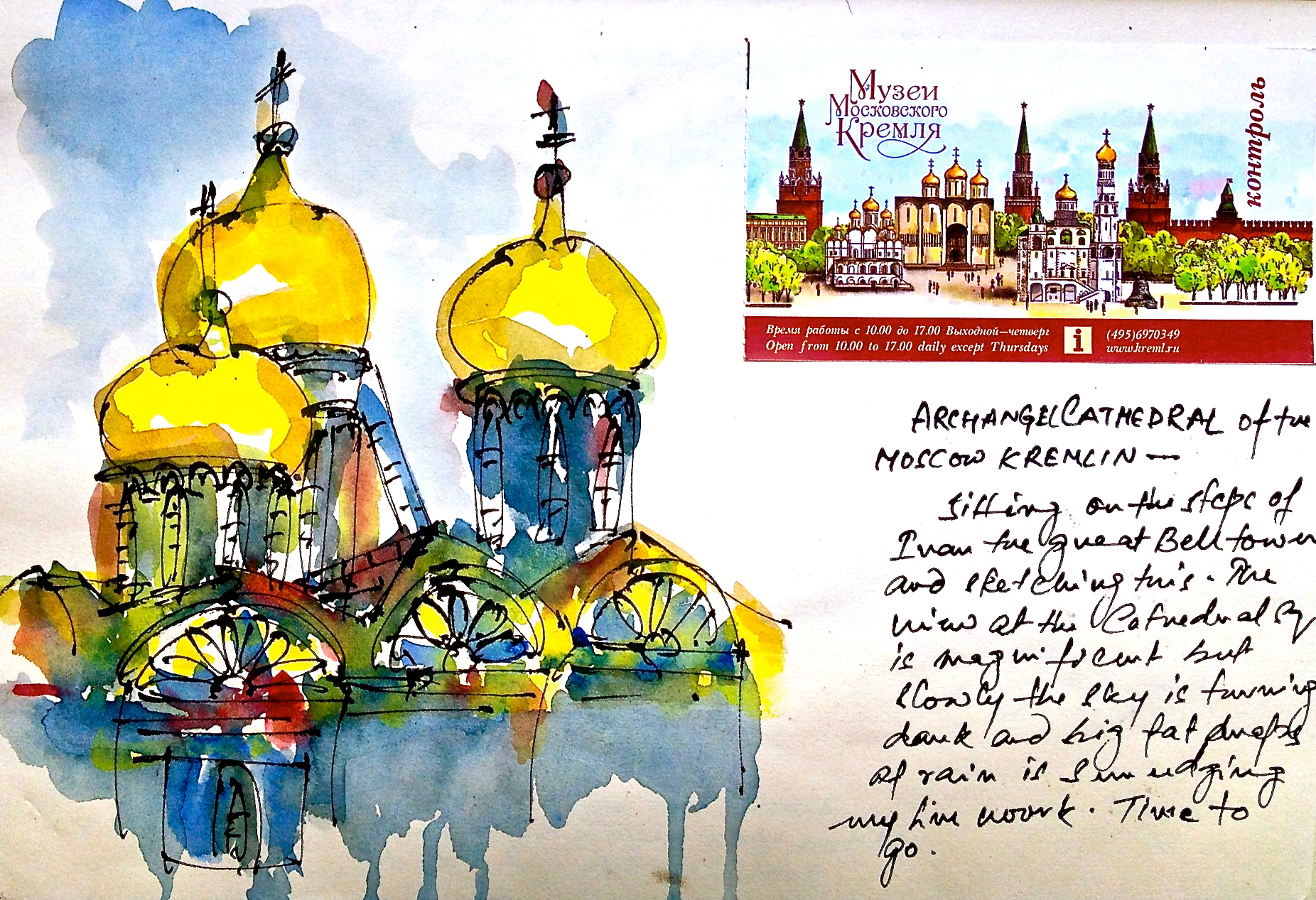
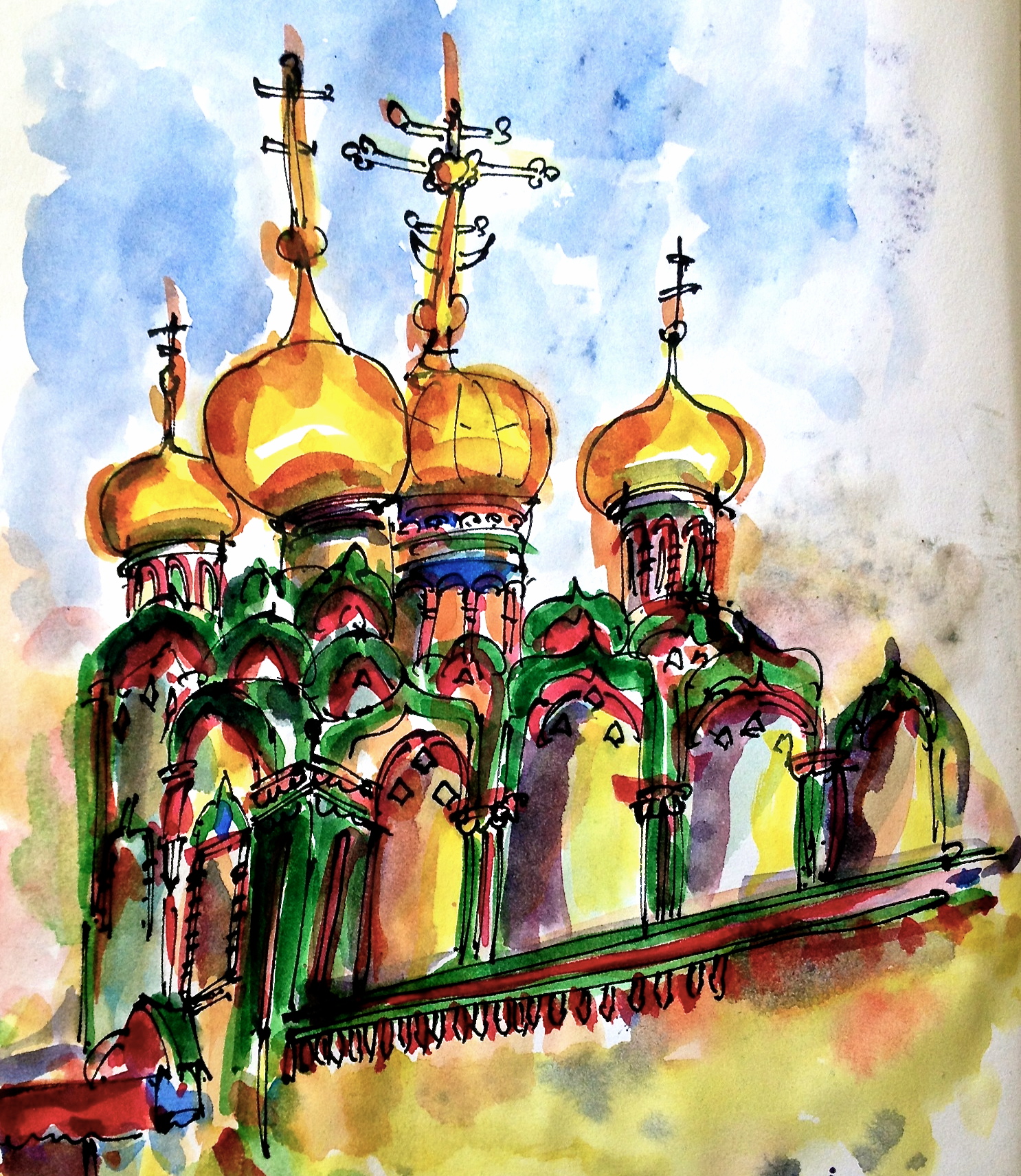
Archangel Cathedral inside Kremlin walls
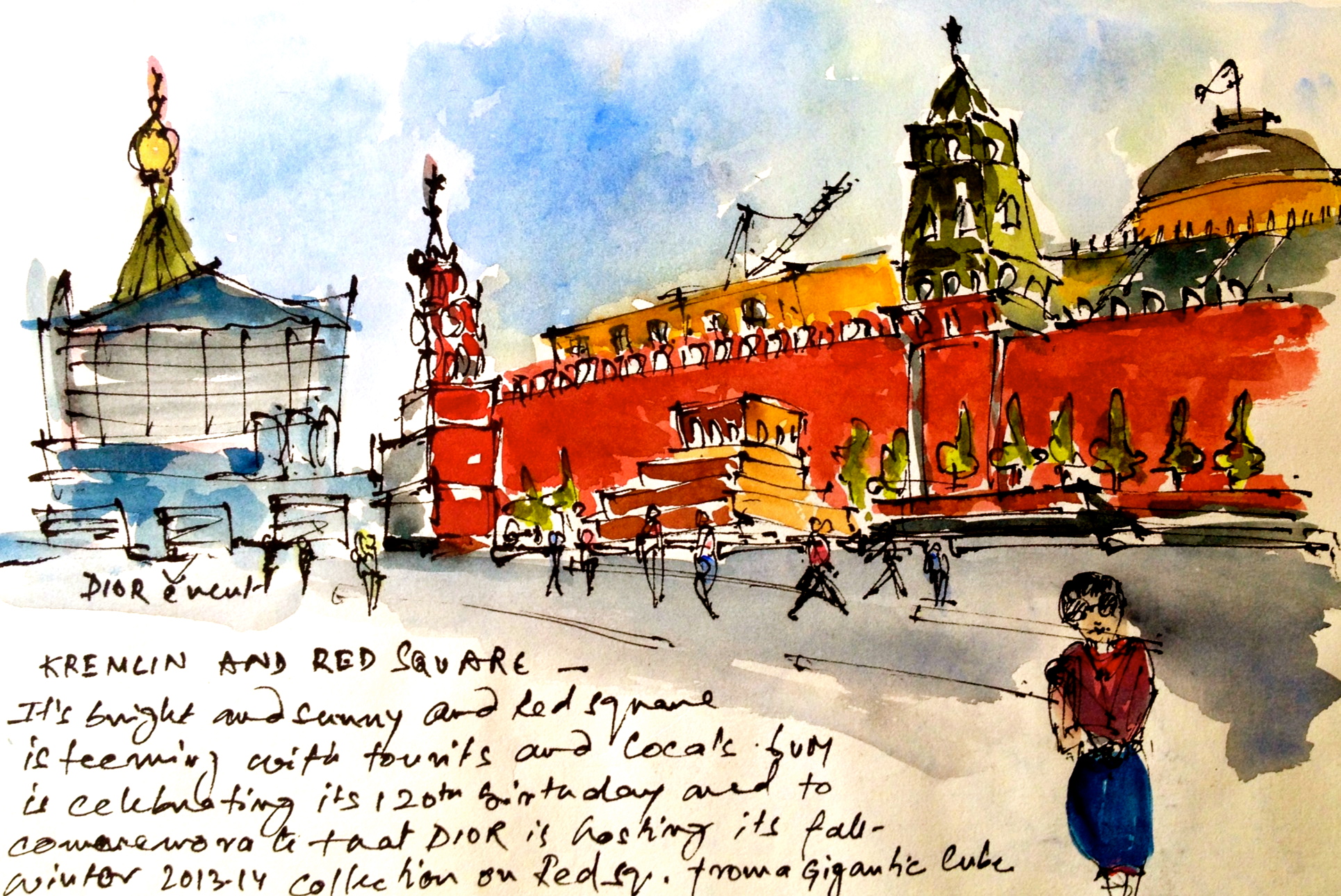
Leaning against a light post and sketching Kremlin and Red Square which has right now been taken over by the huge shiny square box hosting Dior’s fall winter collection. Fashionistas, models and celebrities are walking in on red carpet as I sketch. The place is teeming with media, photographers and security dressed in black.
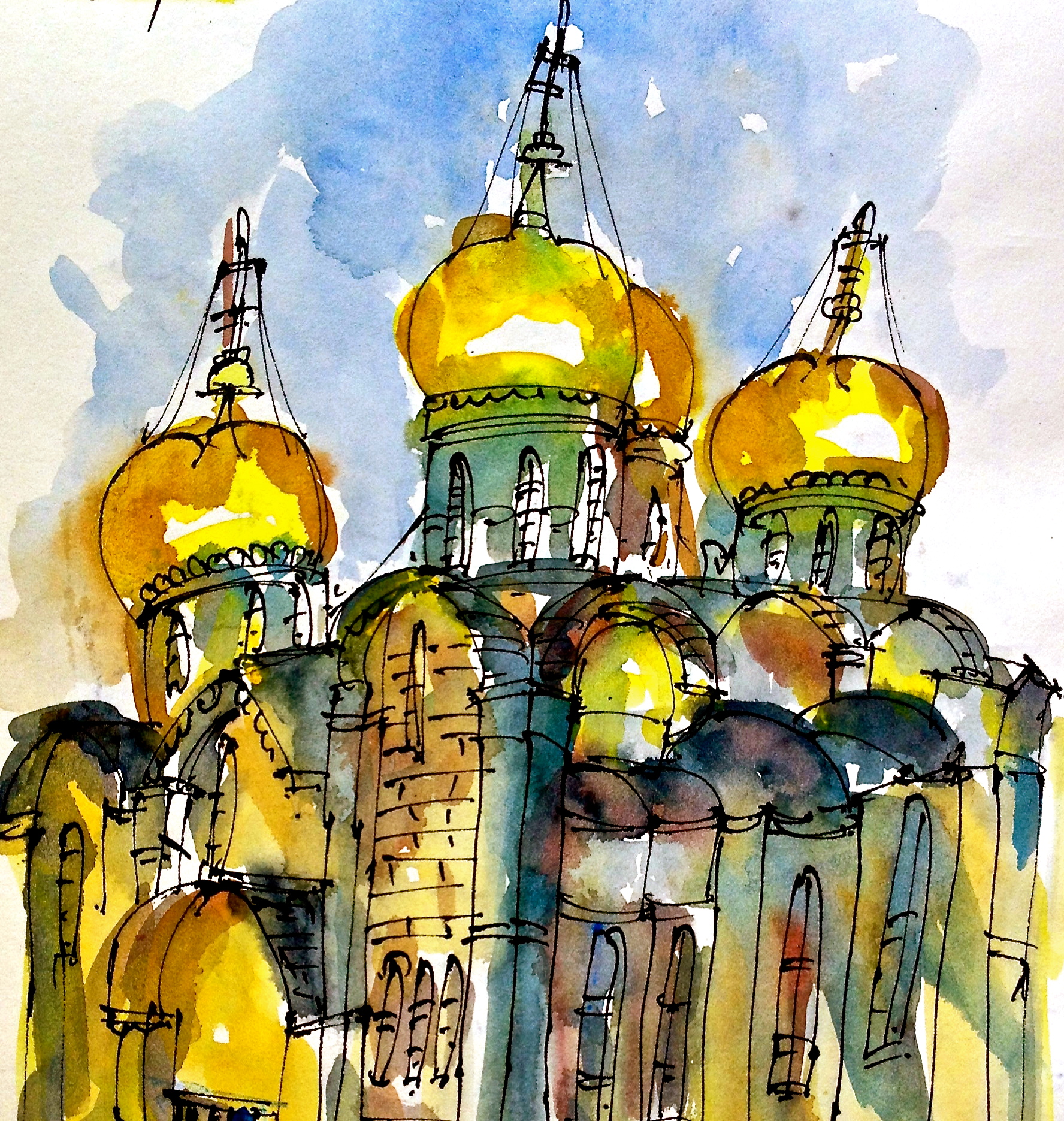
Cathedral of Assumption is easily one of the most beautiful churches I have ever seen in my lifetime.
Of churches, a seasoned traveller once said to me, “After a while everything starts to look the same”. Well, Cathedral of Assumption, the chief cathedral during Russia’s Tsardom and a burial-place for Moscow’s patriarchs and metropolitans, is a class apart. The first impression of walking inside the thickest jungle of ancient frescos, murals, unparalleled iconographies and gilded fixtures covering every inch of the walls, ceiling and pillars, lit in the warm glow of opulent chandeliers, will most assuredly remain with you for a very long time. I settle down on a visitor’s bench, feel the coolness of the stone floor with my bare feet and try to calm a mind that’s giddy with this explosion of colours.
Other marvels to look out for are at a stone’s throw from each other, like the imposing Ivan the Great Bell Tower, the Annunciation Cathedral and the Archangel’s Cathedral which I sketch halfway when the skies open and fat droplets of water start smudging my ink line work. We take shelter inside the nearby Patriarch’s Palace and admire the precious tableware, furniture, jewellery and clothing used by the Tsars. The rain stops, so we exit to the Red Square.

This is my third attempt at sketching St. Basil’s Cathedral. I am sitting in the only shaded spot next to the church and sharing the space with a hopeless drunk.
commanding expanse of grey cobblestone space that has seen many congregations and military parades in its Soviet days. Though rain-soaked, Red Square looks riveting with the candy coloured domes of the iconic St. Basil’s Cathedral at its southern tip contrasting the grey sky. While I dedicate multiple sketches to St. Basil, sitting outside on the cobblestones, the interior isn’t something you’ll want to write home about, specially after Kremlin, except some remarkable patterns and designs that make the frescos.
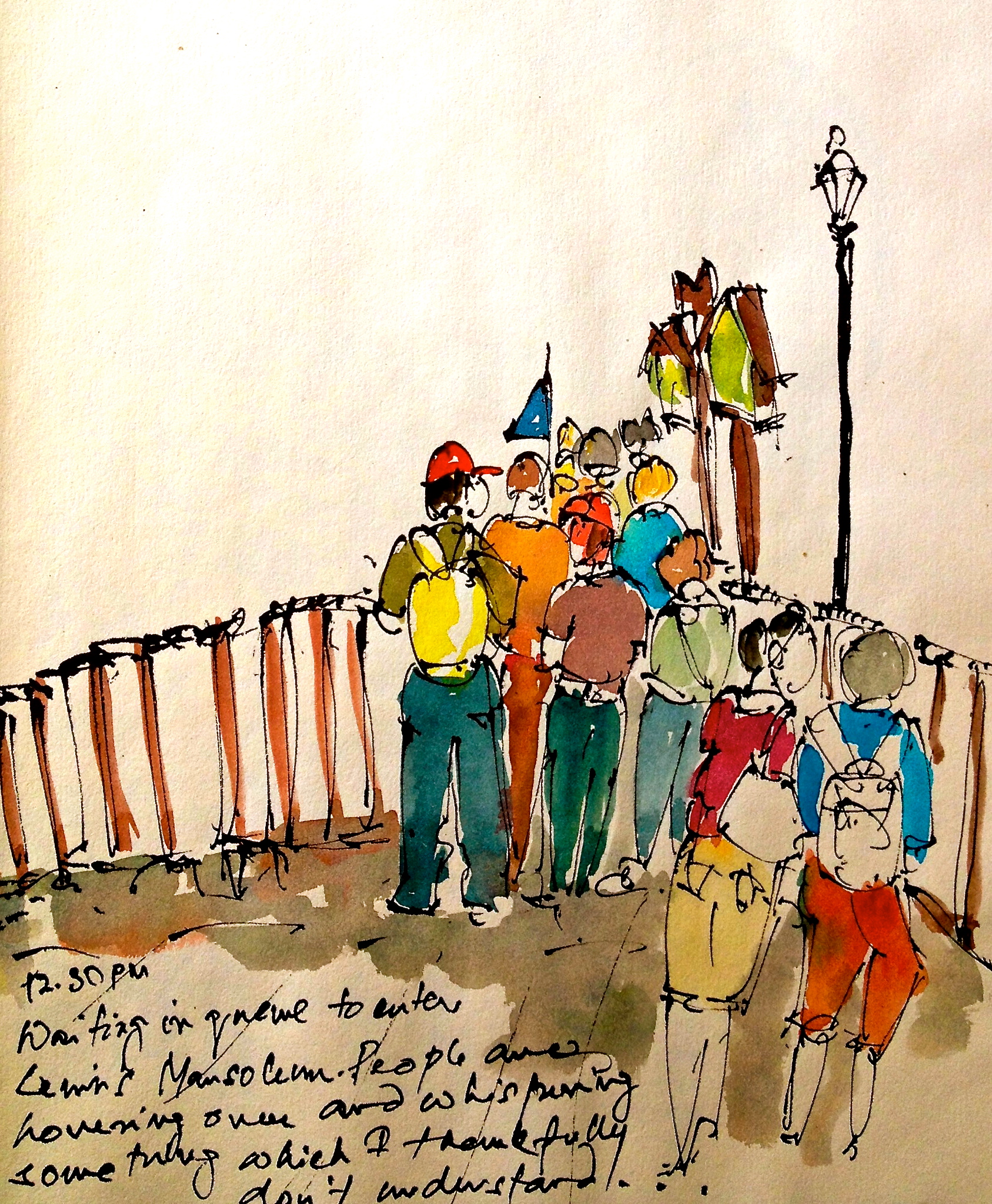
Queuing up for Lenin
If you decide to swing by Lenin’s embalmed body inside Lenin Mausoleum, on Red Square, prepare to come early and stand in a long queue because father of this nation doesn’t charge a cent for your visit and therefore takers are plenty. Surrender camera phones, cameras, bags at the gate, clear security, and be ushered inside a semi dark building guarded by soldiers, where you solemnly and silently walk in a queue around a waxy body lying on granite, inside a glass case.
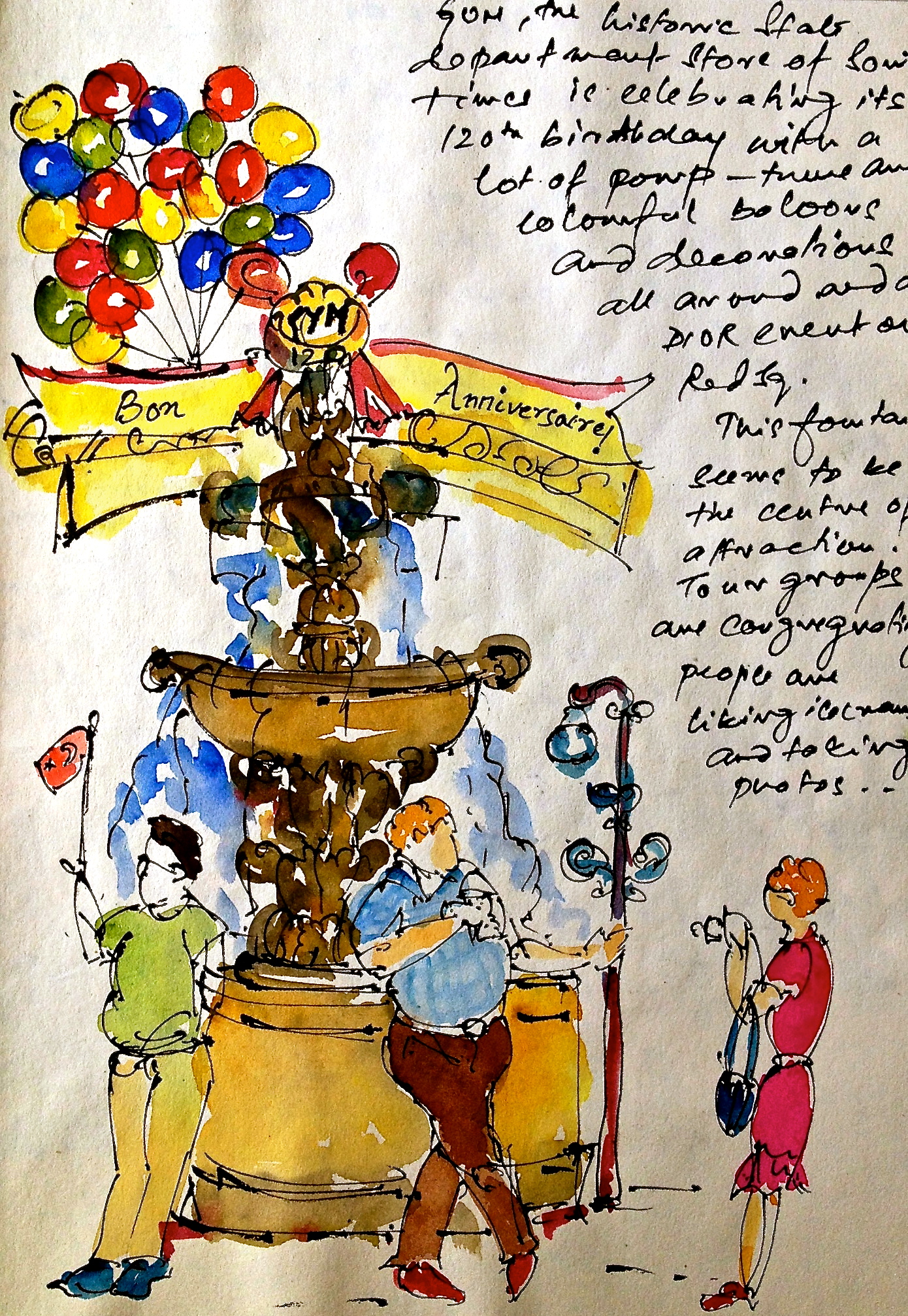
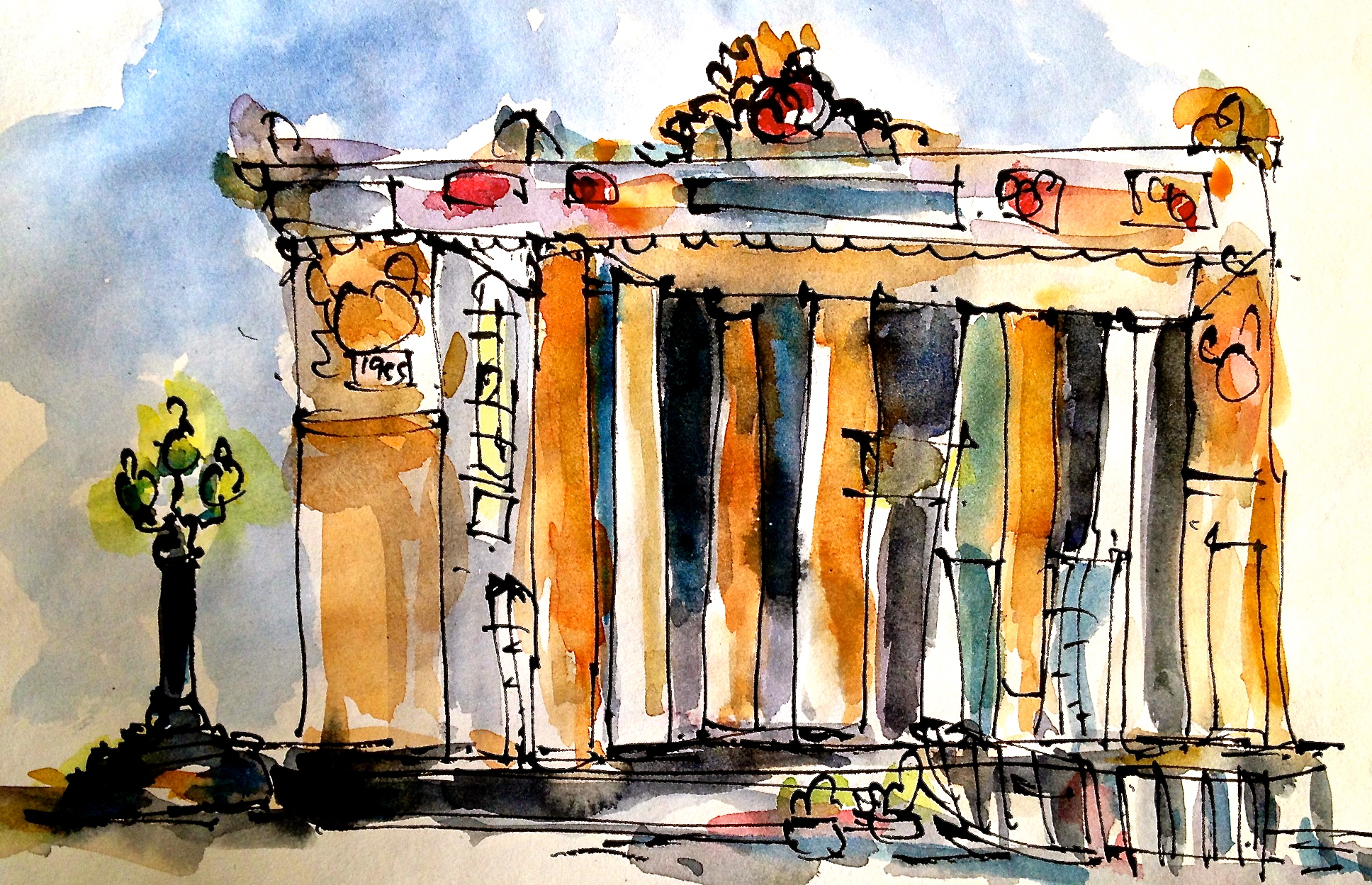
Trying to capture GUM’s 120th anniversary jubilation.
If that was slightly macabre for your taste, step into GUM right opposite the mausoleum on the left of Red Square – and feast your eyes on a architecturally stunning, glass roofed, capacious shopping arcade that’s celebrating its 120th birthday this year. Stop by Stolovaya No.57, a Soviet style cafe on the 3rd floor for inexpensive traditional grub.
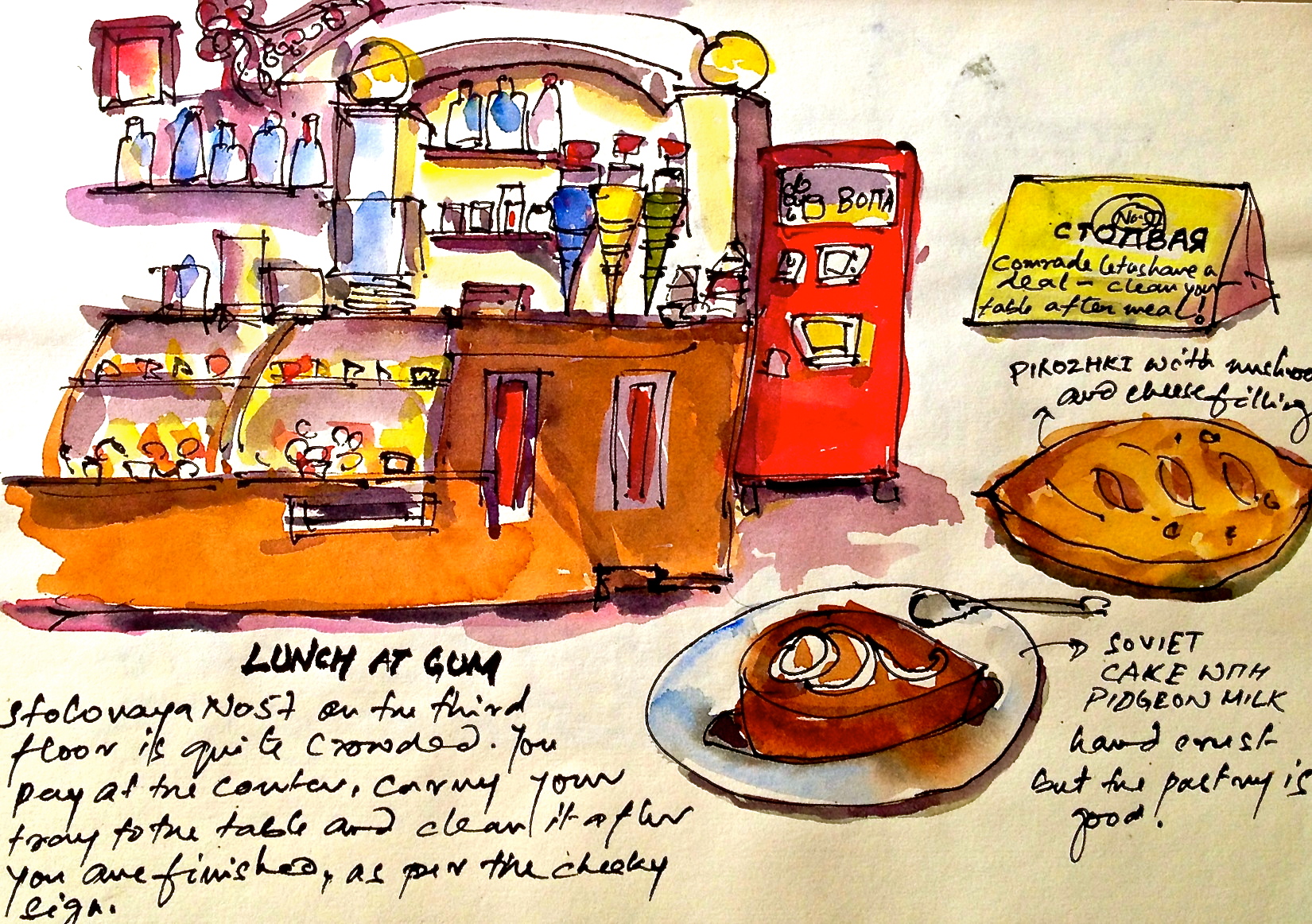
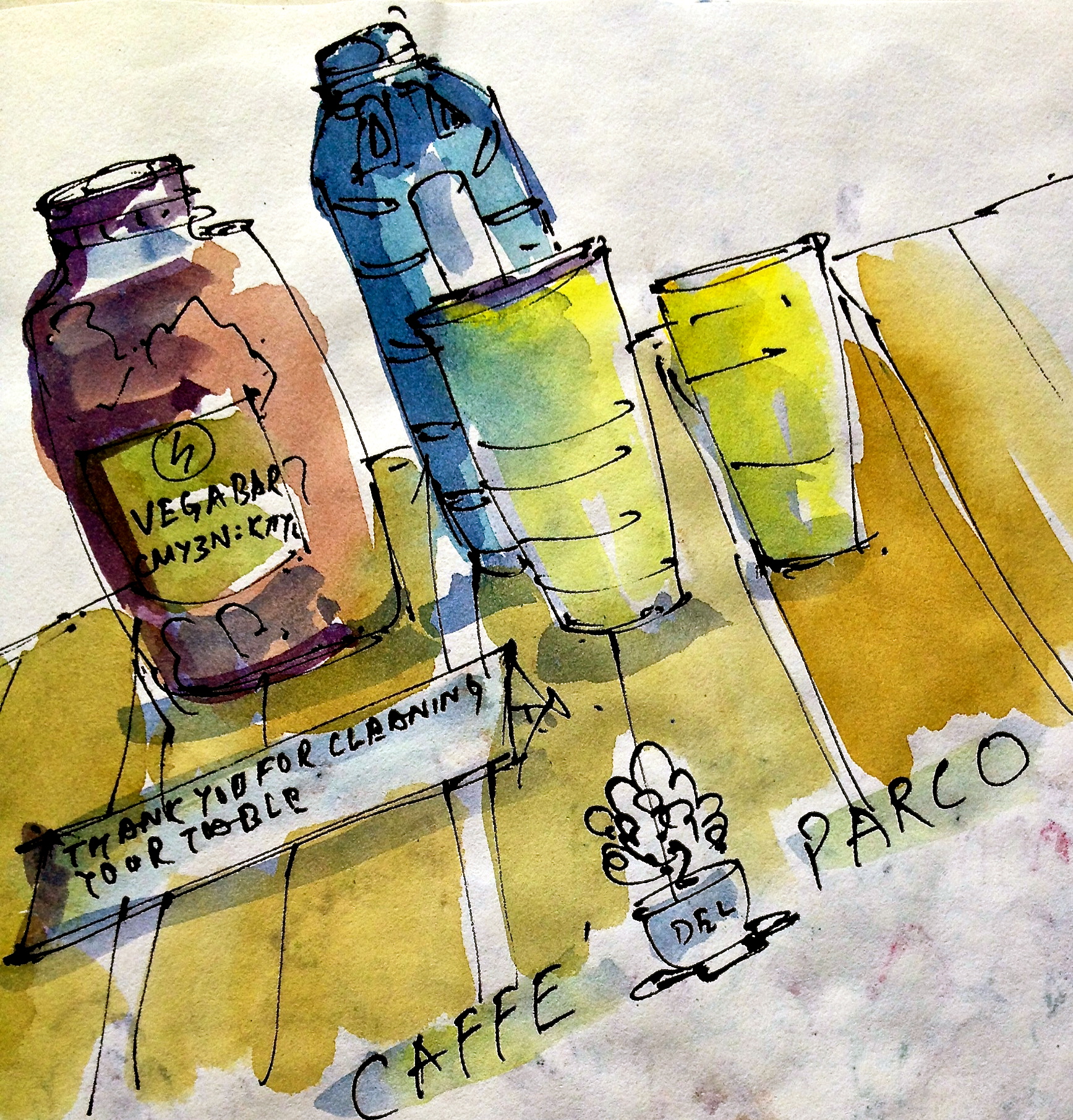
‘Comrade, let’s have a deal, clear the table before you leave’ says a sign on each table
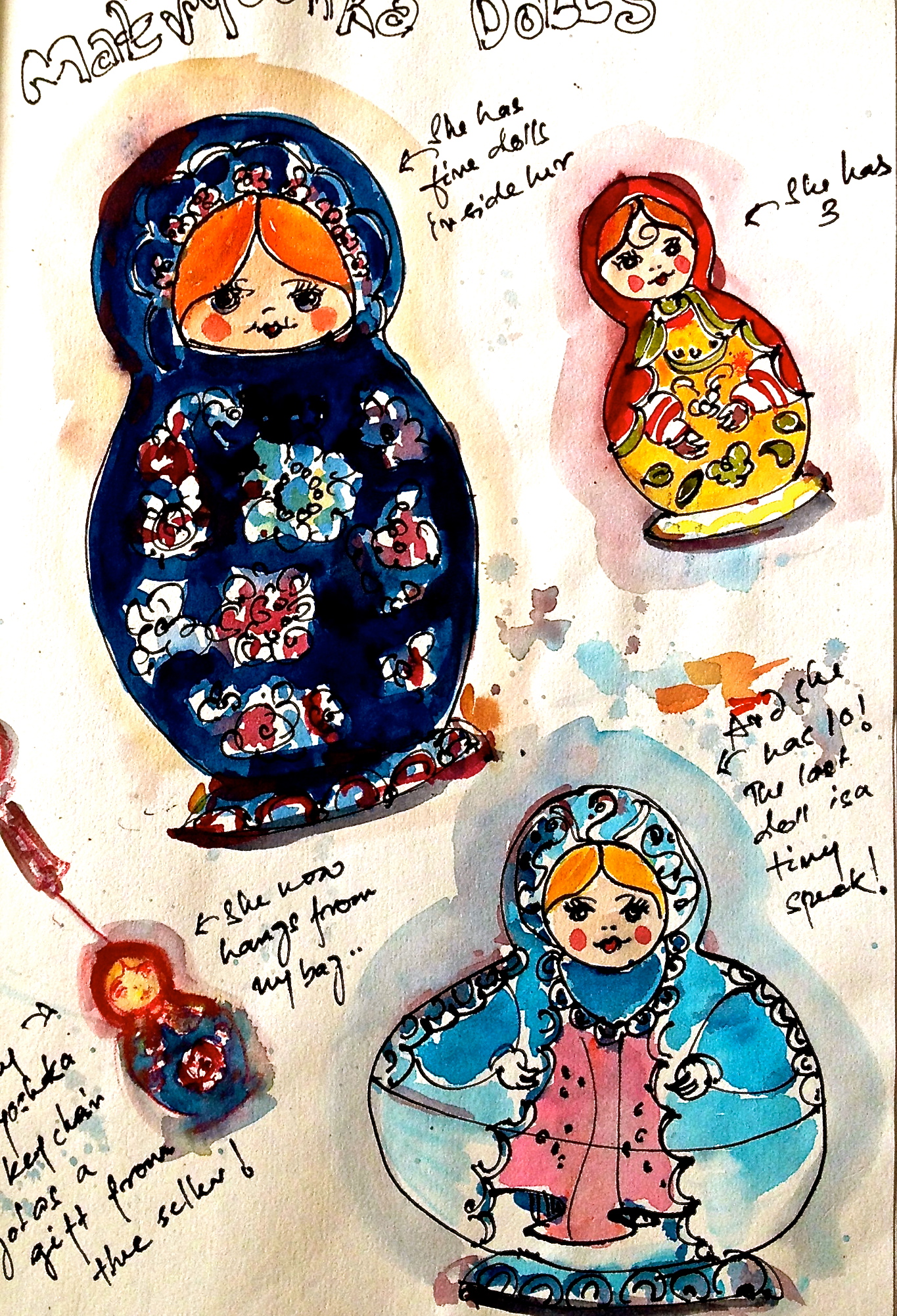
Matryoshka Dolls
Without the crowds flocking in and out, without the frolic, the smell of shashliks, the histrionics of the vendors, the back and forth haggling of their customers, the squeaking and squealing of children, the market seems feeble, inept, perhaps drowsy. Among empty shelves and hollow cleaned out shops , we pass by a few that are still heaving with blue-eyed Matryushkaya dolls in traditional to comic avatars, glistening lacquerware and innumerable Soviet kitsch – badges, lighters and the like. After what seems like an eternity, we emerge with our loot at one-third the price of those selling on the charming pedestrian street – Ulitsa Arbat, where we spend the rest of our evening, strolling lazily while scouting for a dinner joint.
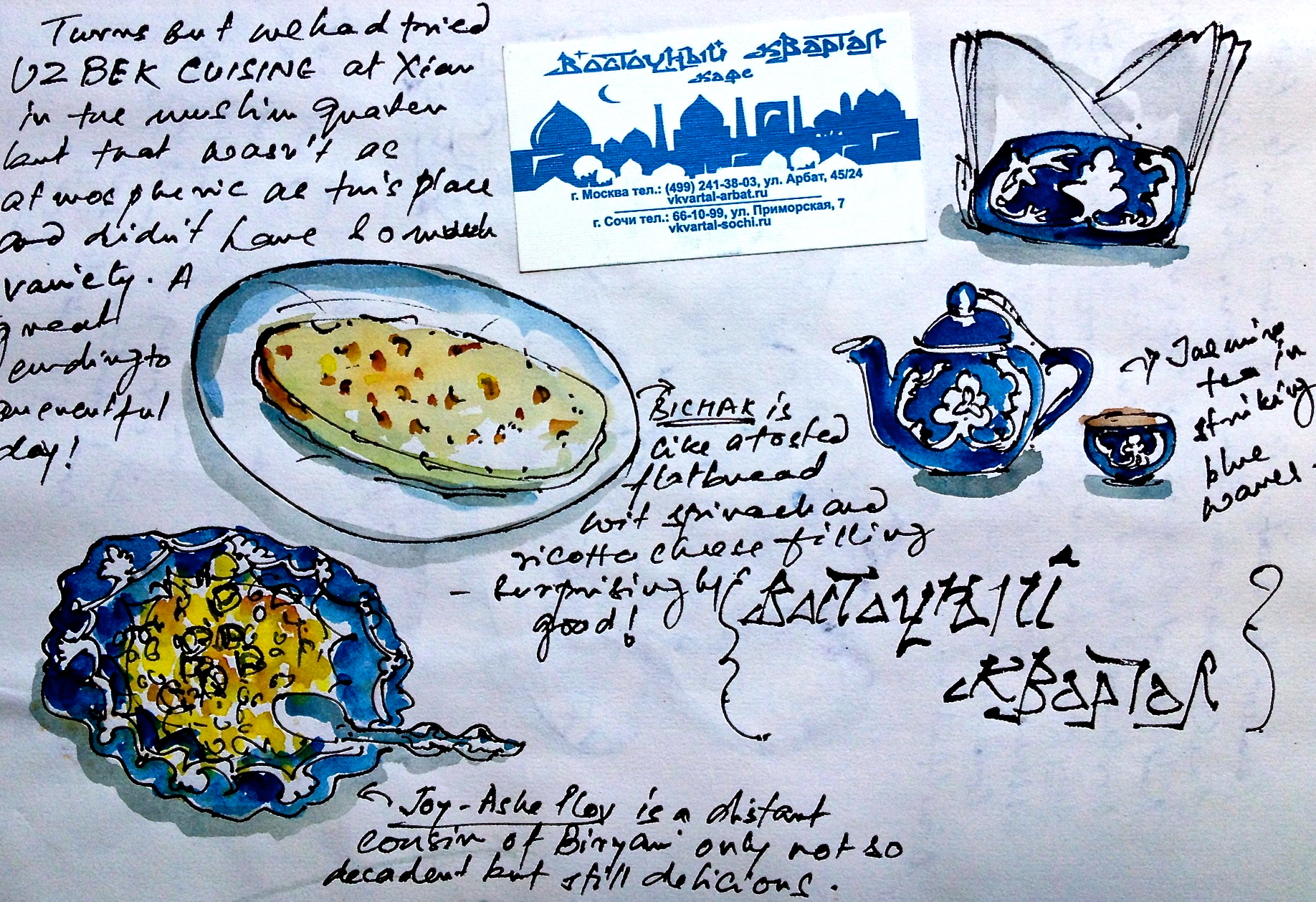
Uzbek Dinner
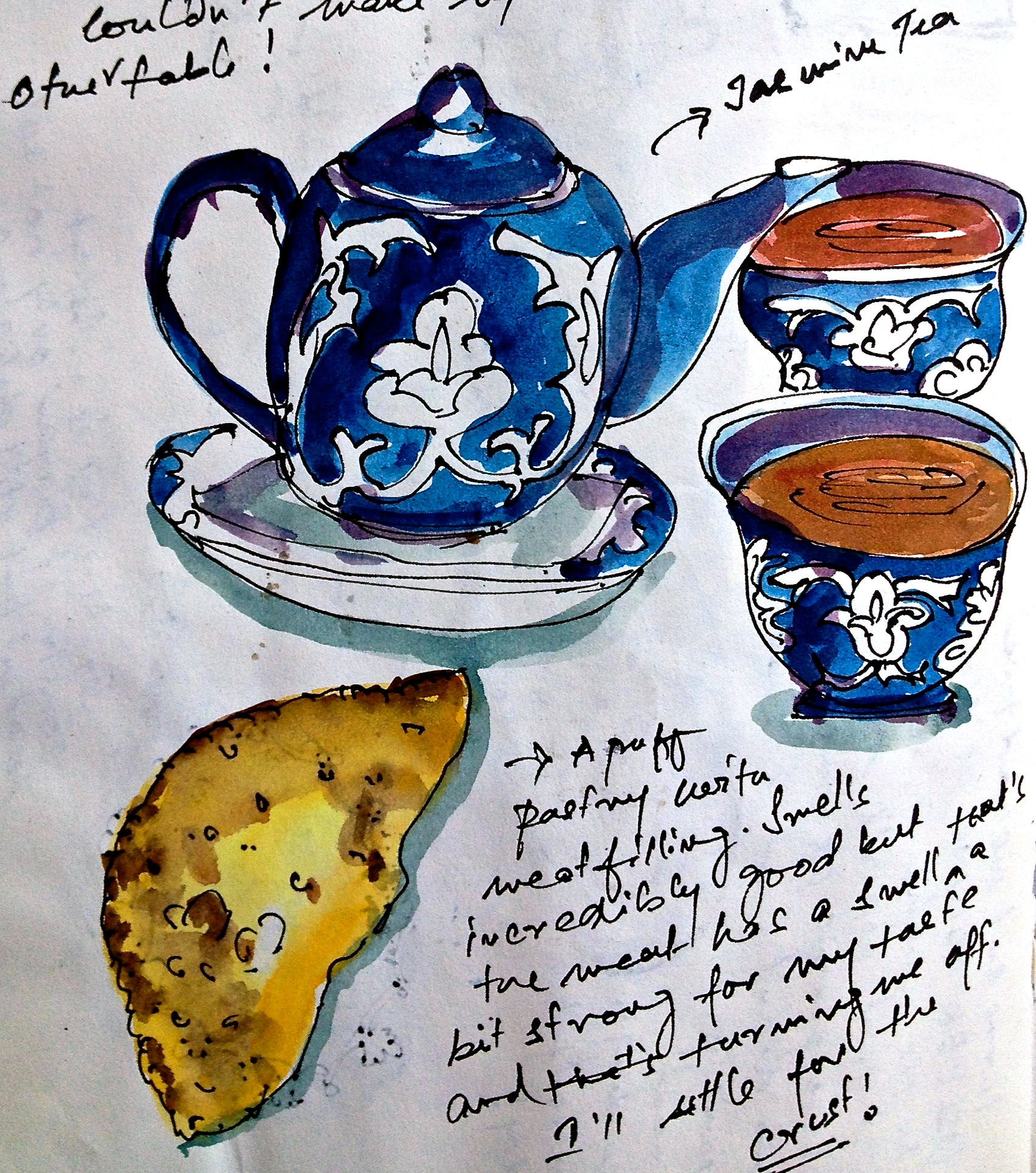 other tables. ‘Bichak’ – essentially fresh spinach and cheese salad stuffed inside a toasted flatbread – serves as the perfect appetizer, followed by ‘Plov’ which seems like a distant cousin of Biryani minus the grated carrots. We cleanse our palate with fragrant Jasmine tea served in provincial aquamarine ceramic wares with alluring pattens, which I cannot help but sketch. Temur, the waiter approves with a shy smile and a nod.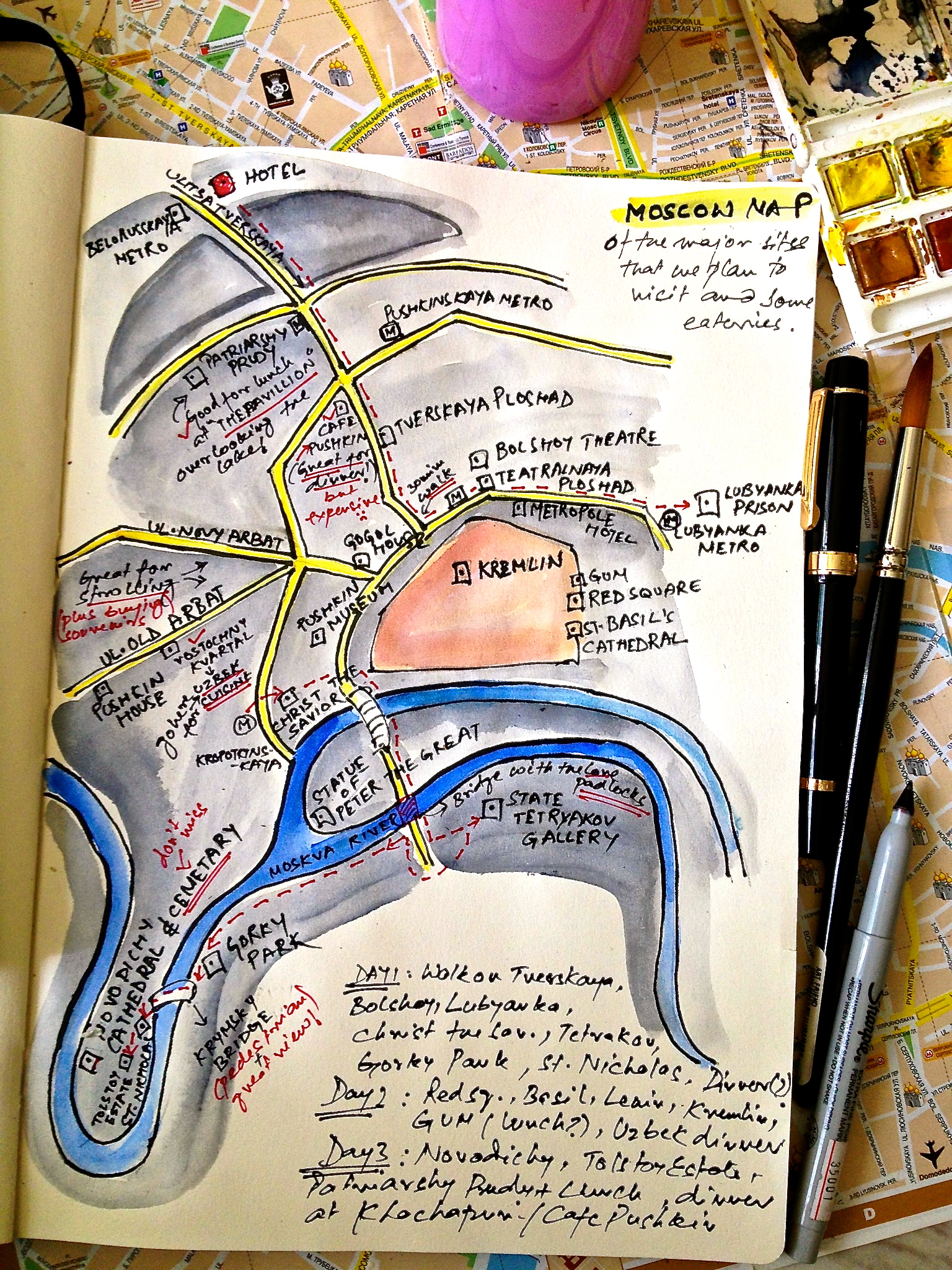




 A Vignettist