Tag Archives: art

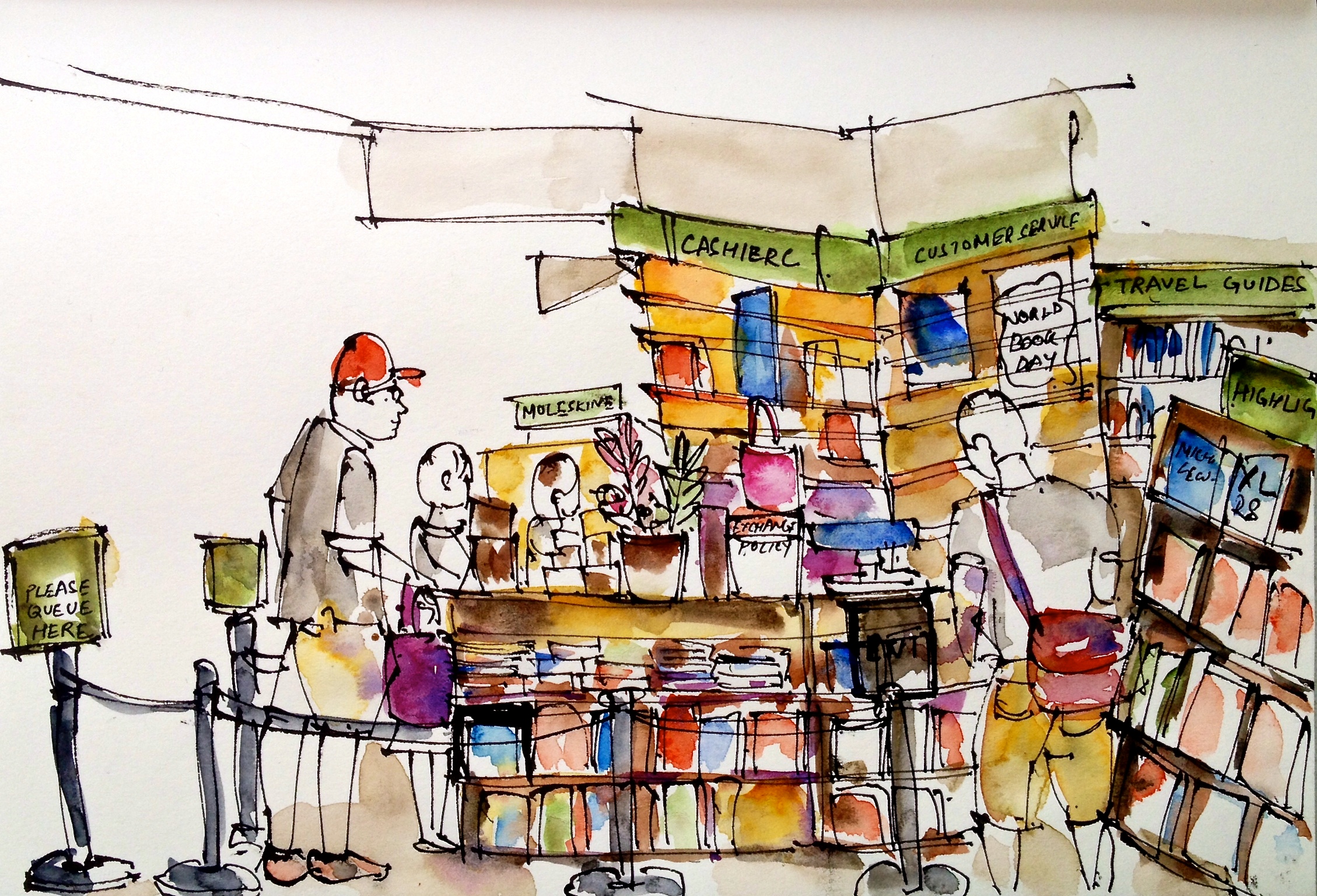
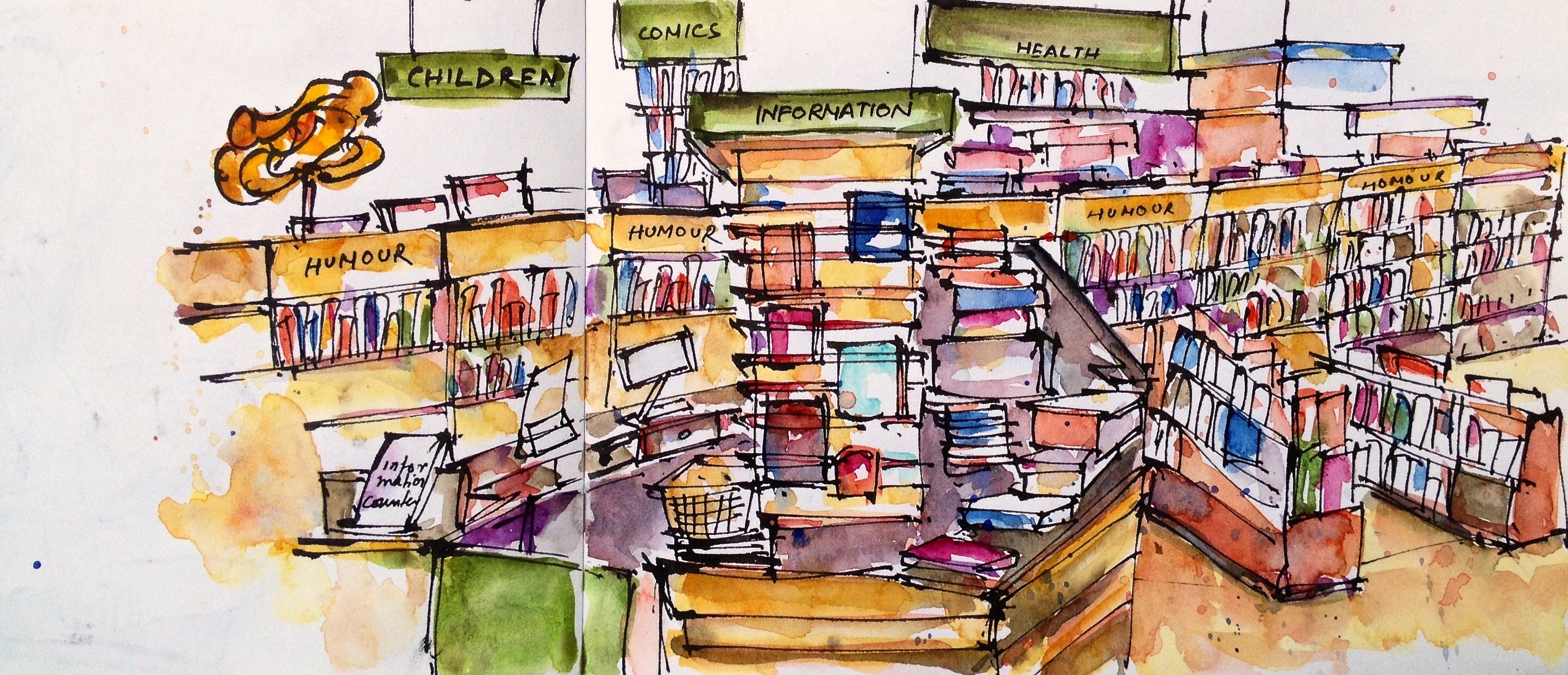
Weekend morning trip to a bookstore

I have seen people queuing up for croissants and baguettes outside bakeries on a weekend morning, or waiting for breakfast at cafes after walking their dogs or heading to yoga classes with a lurid pink mat under their arms, but I’ve never spotted people huddling outside a bookstore, checking their watch, waiting for it to open its doors.

These people are my idols, my brothers (or sisters) in arms. I could have been any one of them or will be when my love for books trumps my desire to sleep-in on weekend morning. But today I am here with a different motive. Urban Sketchers Singapore have been allowed to invade the 43,000 sq feet space of Kinokuniya’s flagship store at Ngee Ann City for 3 hours. Why the privilege? Because the store is moving out and when it does, our sketches will serve as sentimental memorabilia.

Now before you start brooding and beating your chest in agony, Kino is not vamoosing for good. It is just moving to the floor above, which – here comes the caveat – will be a smaller space. So if anything, you should be worried about the possible downsizing of your favourite section.

As for me, I am rapidly using my Kino gift cards to buy more books to propitiate the mighty book goddess, praying that my favourite Art and Design section remains forever bountiful. Add to that the travel literatures and also the cookbooks. And the classics.


The books were calling my name, especially the art & design section. It was very hard to concentrate.

The books were calling my name, especially those from the ‘art & design’ section, right behind me. It was very hard to concentrate.

In the age of small screens, it is reassuring to see people buy the real thing.

In the age of small screens, it is reassuring to see people buy the real thing.

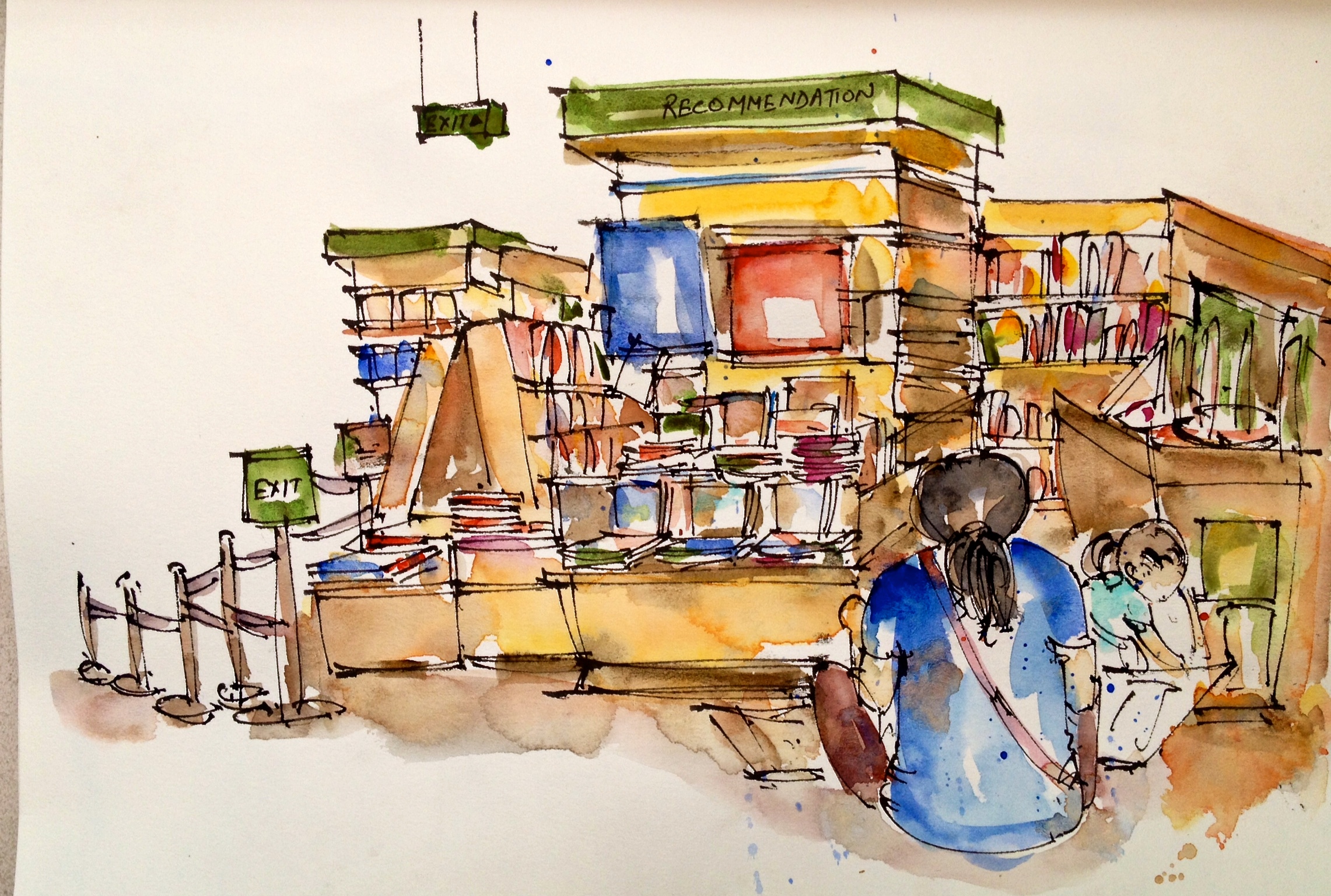
Thumbs up for this mother (also an urban sketcher) who brought her munchkin to a bookshop early morning.

Thumbs up for this mother (also an urban sketcher) who brought her munchkin to a bookshop early morning.

Ignoring the resounding book pleas and sketching more shelves. I am a saint!

Ignoring the resounding book pleas and sketching more shelves. I am a saint!

Wrapping sticky rice dumplings at an old Chinese temple

One of the quickest, most authentic and fun way to get intimate with a city is to speak with the taxi drivers. Seriously, two strangers stuck in a vehicle for a while might as well talk and if possible learn something from each other. It might be an anomaly in many parts of the world, but most taxi drivers in Singapore are amicable and have given me the lowdown on everything from local food, culture, religion to people and politics. Even job leads and life wisdom, though unsolicited.
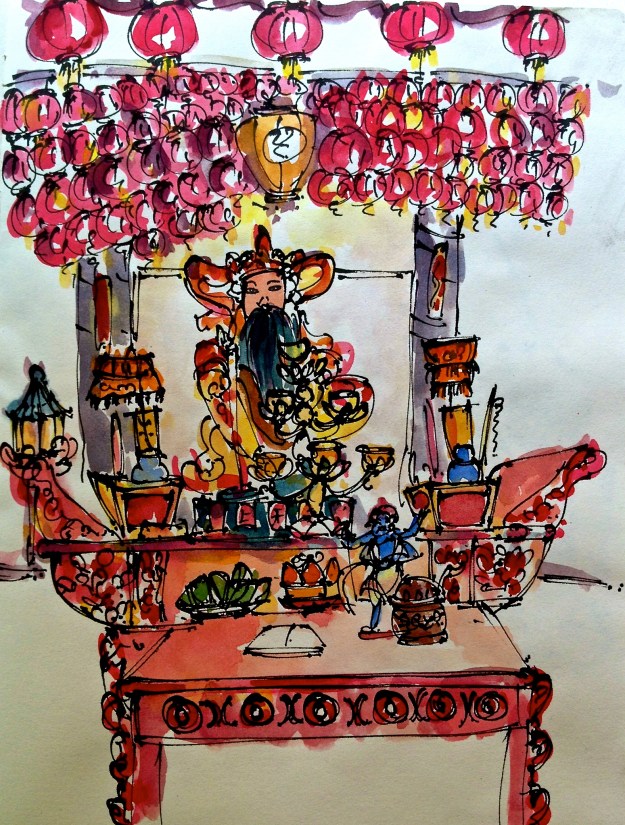
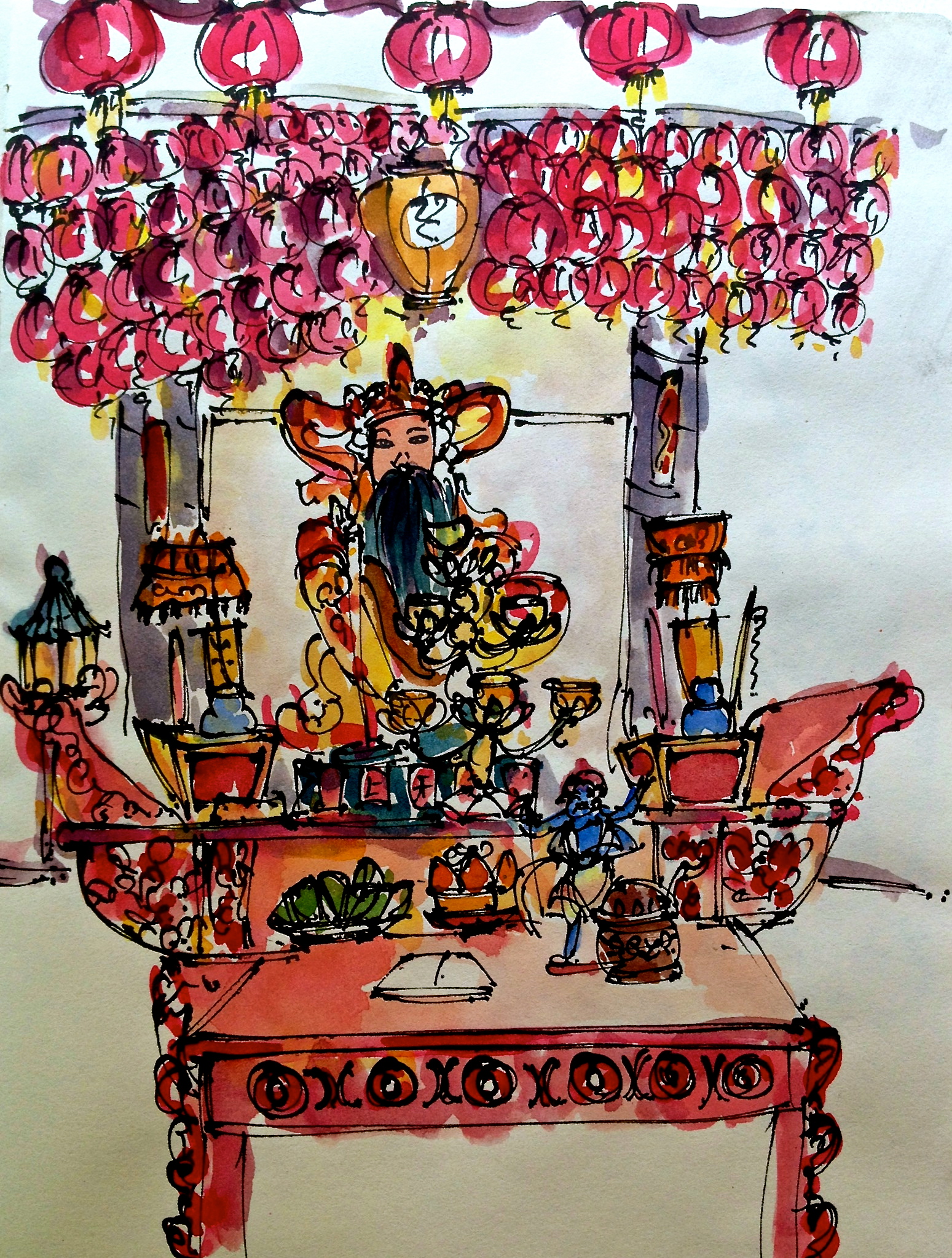
'The general of the north' - a revered Taoist deity in the Xuan Dian Jian temple, Singapore

‘The general of the north’ – a revered Taoist deity in the Xuan Jiang Dian temple, Singapore

Naturally I had no qualms about asking my cab driver the legend behind Duanwu festival, also known as the Dragon Boat Festival or rice dumpling festival, to which I was headed. The venue was Xuan Jiang Dian, an eighty-plus-year-old Chinese temple atop a hill at 85 A Silat Road, where a group of us were invited to hang out, sketch and watch the making of rice dumplings and eat them, of course. “Why don’t you check the story on the internet?”, asked the cab driver.
I could but I pressed him to narrate. Because a folklore is desultory when read in black and white. Because a folklore needs a voice to come alive, its inflection to set the mood and often a pinch of hyperbole to build momentum and pique the right amount of interest.
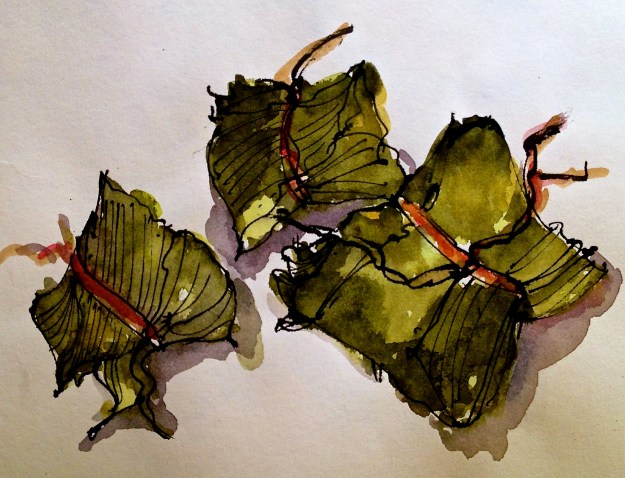
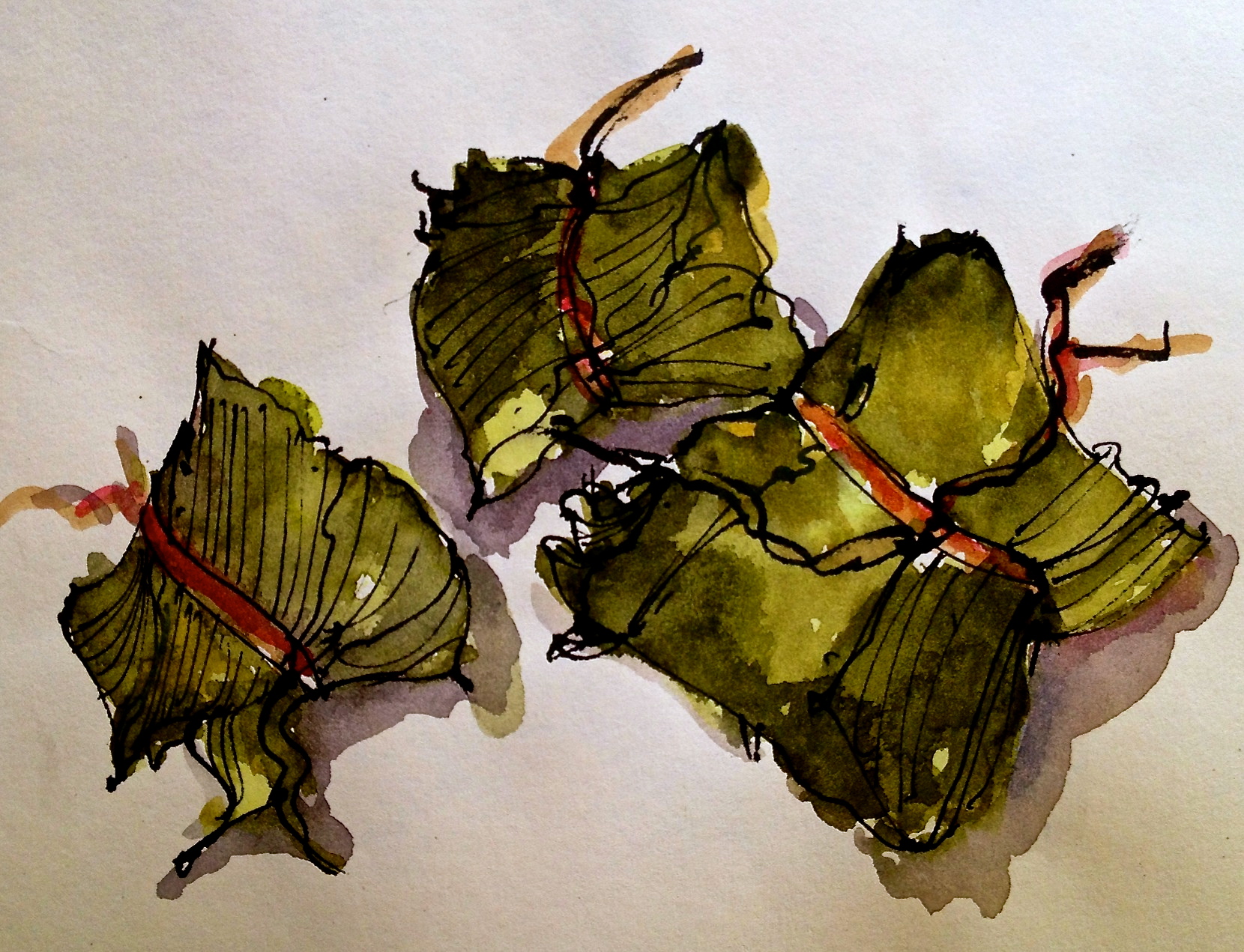
Sticky rice dumplings wrapped in bamboo leaves

Sticky rice dumplings wrapped in bamboo leaves

When we stopped at the second signal, he began with the disclaimer that there are more than one version of the story. I nodded in eagerness, while he cleared his throat. “Long, long ago , an honourable Chinese minister who’d offended the king, was banished from court. In despair the minister committed suicide by drowning himself in the river on the fifth day of the fifth lunar month. When locals failed to find the body, they rowed their boats into the river, beating their drums loudly and splashing their paddles on water to scare the fish. Some dropped sticky rice dumplings wrapped in bamboo leaves into the river to feed the fish and keep them from devouring his body.”
“Fascinating!”. But when did this happen? Who was the minister?” Which river did he drown in? I was curious.
“Dunno lah! All I know, is every year on fifth day of the fifth month of the Chinese lunar calendar, which is…June 12th this year, we race dragon boats and eat sticky rice dumplings for a month.”
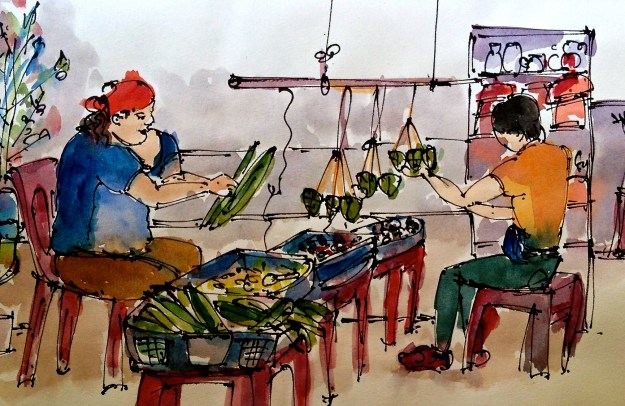
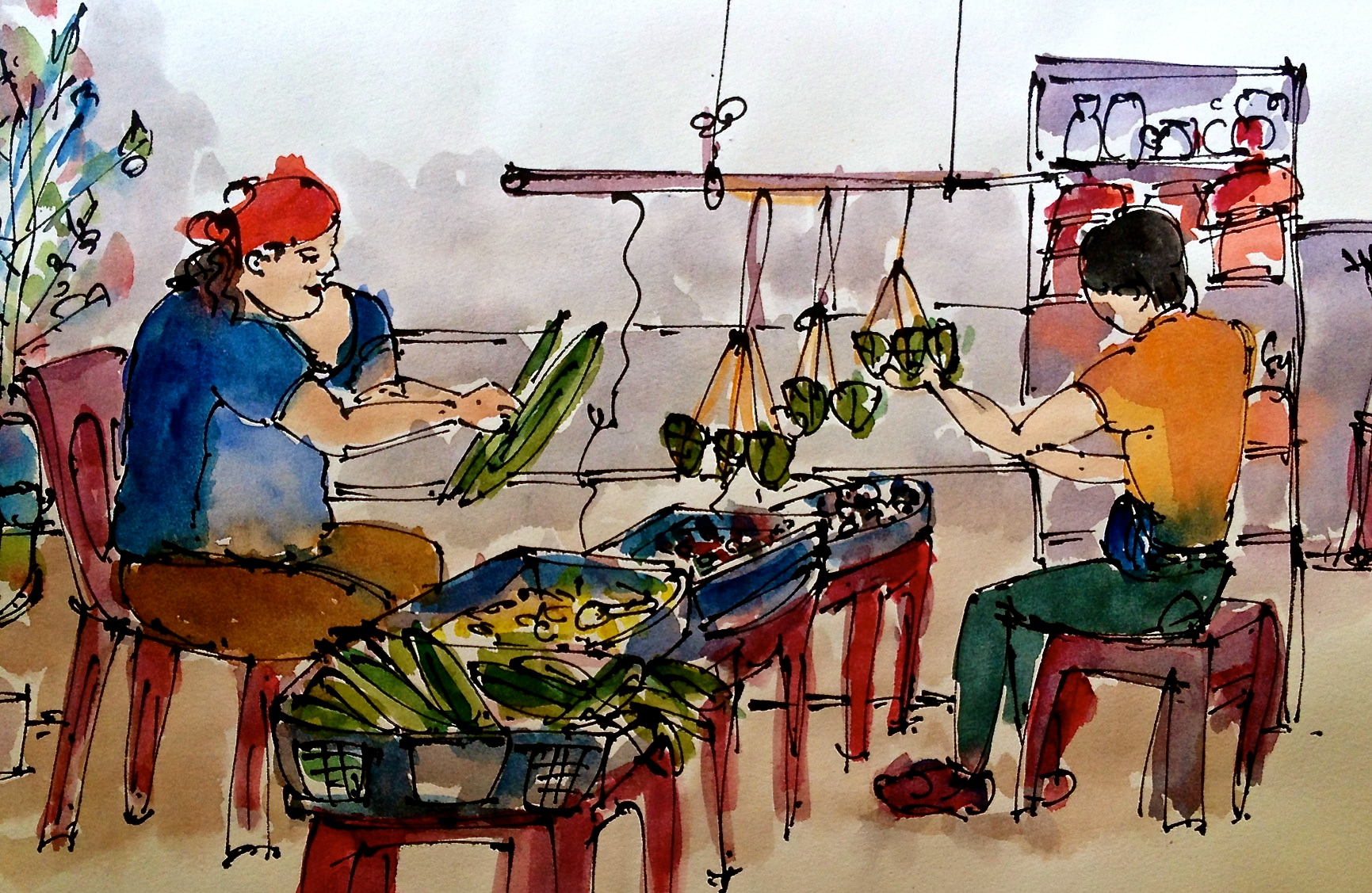
Volunteers at the temple wrapping the sticky rice dumplings

Volunteers at the temple wrapping sticky rice dumplings

The temple was a sight to behold, with bright red lanterns, fiery looking dragons with long tails and formidable statues of Xuan Tiang Shang Ti, the resident deity, also known as the general of the north, dressed in imperial clothes, residing inside one of the most exquisite lacquered alters, I have ever seen. With his red face, large bulging eyes and long flowing beard, he is supposedly one of the most revered Taoist deities. “Notice that his right foot is on a snake and the left one is on a turtle”, said Victor Yue, a salt and pepper haired Engineer who’s a Chinese temple geek, and an excellent storyteller.
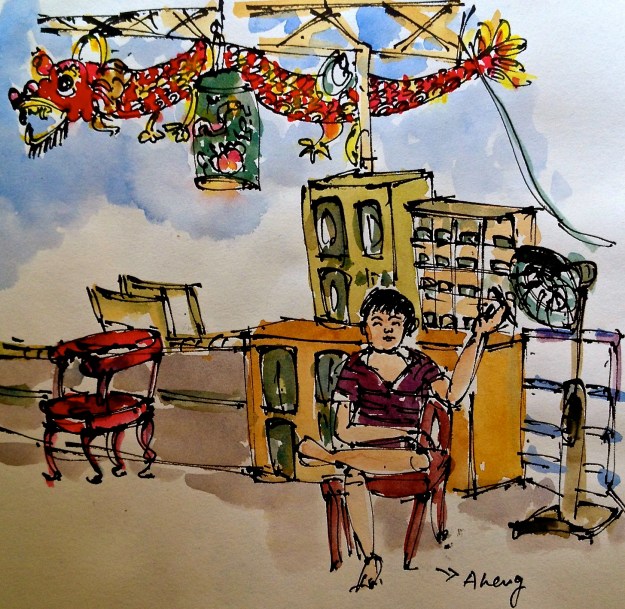
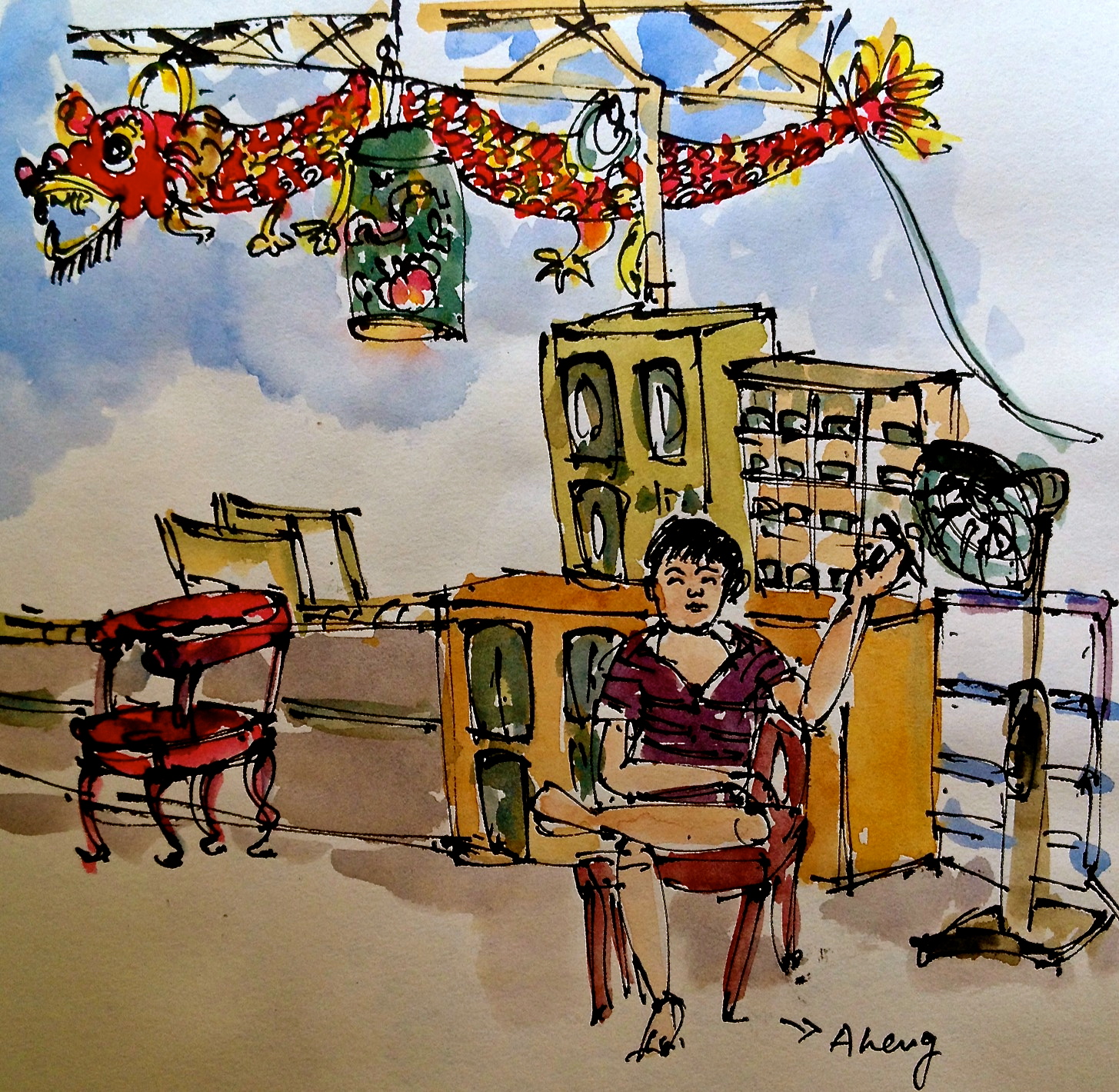
Aheng who's taking it easy with a cigerette between his fingers, is actually the temple's spirit medium who goes into a trance twice a week and offers consultation to devotees on their issues ranging form medical, marital to spiritual.

Ah Heng, who’s taking it easy with a cigerette between his fingers, is actually this Taoist temple’s spirit medium who goes into a trance twice a week and offers consultation to devotees on their issues ranging form medical, philosophical to spiritual.

When I started picking his brain, Victor fed my curiosity with an enthralling tour of the temple and a crash course on Taosim and spirit mediums such as Ah Heng (see my sketch above) who are consuted on a regular basis by devotees to cure their ailments. The only thing that distracted me from our intense spiritual discussion was the smell of rice dumplings. Two volunteers had fixed themselves a make shift rice dumpling station on plastic chairs with a basket of steamed bamboo leaves, a tray each of rice, cooked mushrooms and pork.  
 
When friends tease and taunt you with stories of how hard it is to wrap a rice dumpling, how mothers and grandmothers still do it with ease and finesse and they can’t make it happen after years of practice; you are naturally instigated to try wrapping at least one and see for yourself, rather than agreeing like an idiot. When I hovered around the fringes of the crime scene, the volunteers dared me. “Want to try?” They were wearing surgical gloves and bandanas. “Go wash your hand first.”
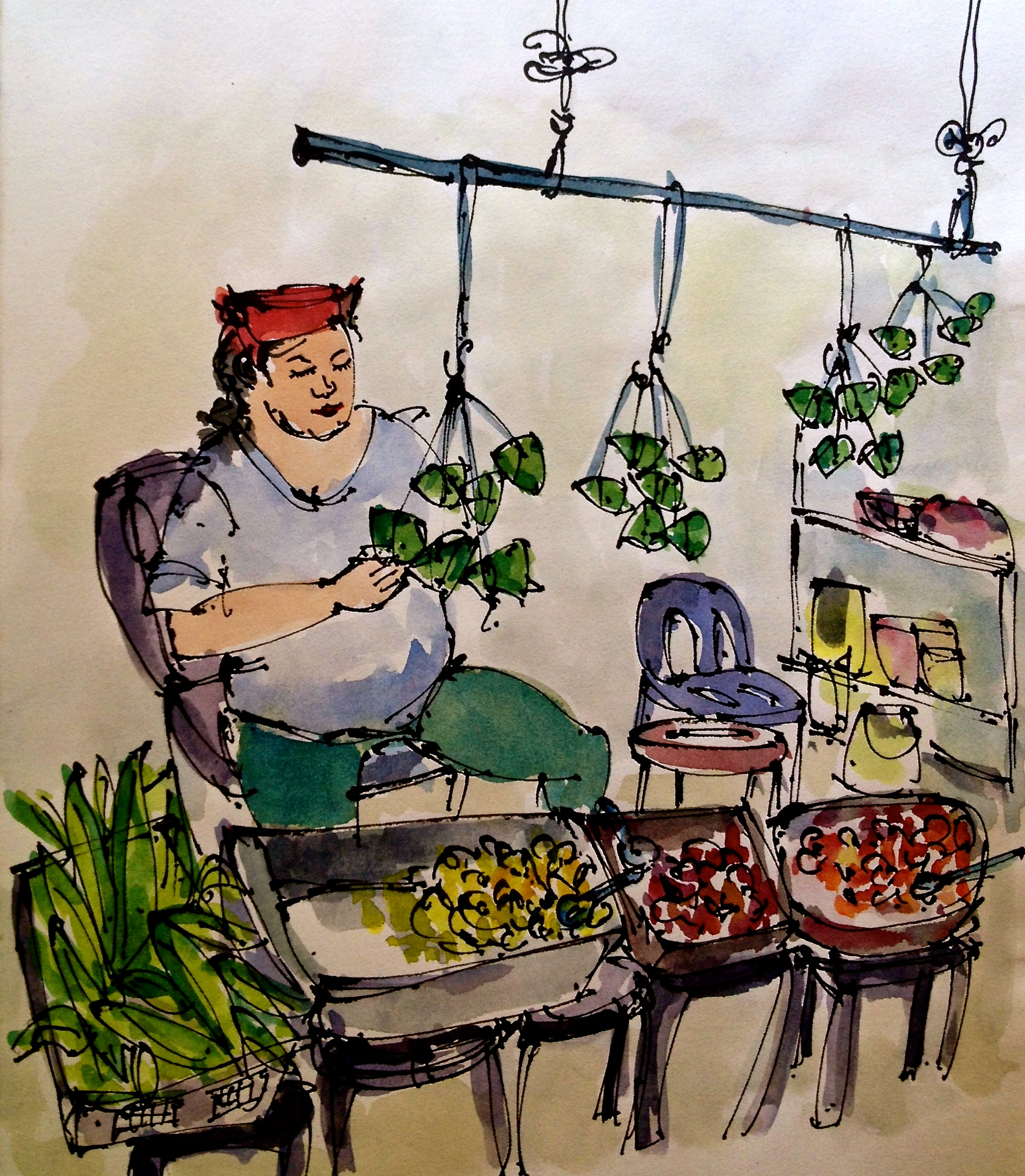
Hanging the finished dumplings on the steel rod, to be boiled later.

Hanging the finished dumplings on the steel rod, to be boiled later.

The bamboo leaves are soaked in water before they are ready to be used.” said Victor. Three leaves overlap each other, two on one side and the third on the other, making an anorexic “Y”, which is then twisted to make a cone; into which goes a spoon of rice, a spoon of mushroom and a spoon of pork. The cone is then folded, tightly shut, tied with a string and hung from a steel rod hanging from above. To the two dumplings that I wrapped, the volunteers matched five each and giggled a lot, probably at my expense. Friends cheered me and clicked photographs as if I was wrangling a croc with my bare hands. But wasn’t I merely wrapping a very sloppy rice dumpling? 
 
Yes and no. My fruit of labour was shoddy no doubt but by rolling up my sleeves and getting my hands dirty ( or sticky) that morning, I had tacitly shed my wide eyed tourist garb. The volunteers warmed up to me. “Do visit anytime you want to” and “Eat one more dumpling, won’t you?” and “Did you see, she wrapped two dumplings?”. 
The rice dumplings were dropped into a large metal can of boiling water atop an open fire made out of wood and coal. “We can’t have such big pots in our homes, so my mother steams the dumplings in batches through the night, so we can have them in the morning on the festival day.” said Chao Zhu, a fellow urban sketcher, who was visiting the temple on a second consecutive year to celebrate Duanwu. I was curious to know if she could wrap rice dumplings nearly as good as her mother. “Gosh no! Unfortunately it’s becoming more and more obscure. I don’t think I can pass it down to the next generation.” Sadly there were too many heads nodding in agreement.
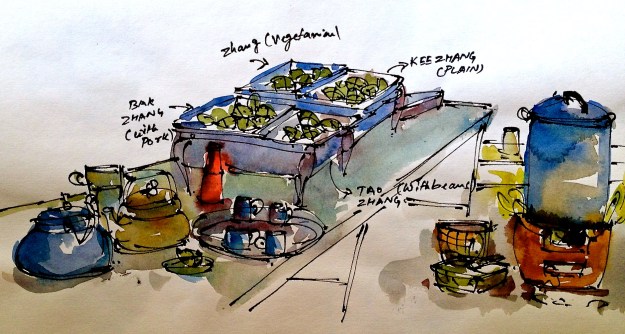
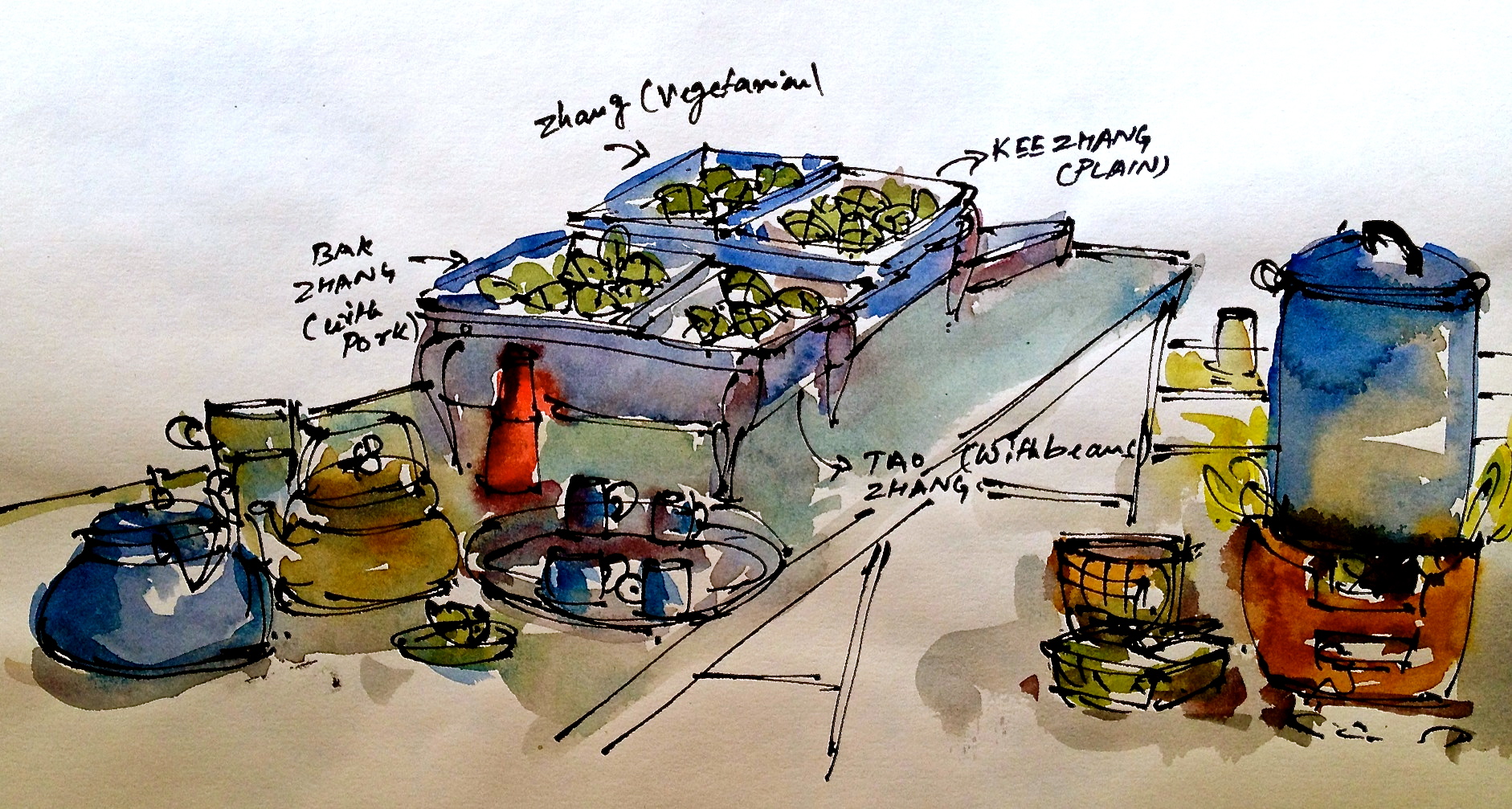
Four different types of dumplings laid out with hot tea and ketchup

Four different types of dumplings laid out with hot tea and ketchup

After the dumplings were boiled, the volunteers laid them on a table in separate trays with name tags indicating their type – Kee Zhang (plain rice dumplings with no filling), Zhang (Vegetarian dumpling), Bak Zhang ( dumplings with pork filling) and Tao Zhang ( dumplings with beans). Kettles of tea, disposable plates, cups, bottles of ketchup (to accompany the dumplings) were set up. After our fill, when we were ready to leave, the volunteers packed us the leftover dumplings. “Souvenirs from the temple!” said Victor.
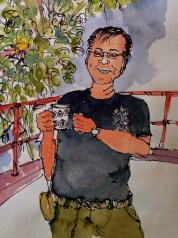
Victor, regaling me with his stories

Victor, regaling me with his stories

Back home, I checked the internet all right –  Duanwu festival commemorates the death of the patriotic poet and revered minister Qu Yuan ( 340 – 278 BC) of the ancient state of Chu. He committed suicide by jumping into the Miluo river in Hunan province, because he was accused of treason and exiled by the king for opposing an alliance with the state of Qin.

So much for getting the facts straight, it’s still the cab driver’s dramatic narration that rings in my ears.
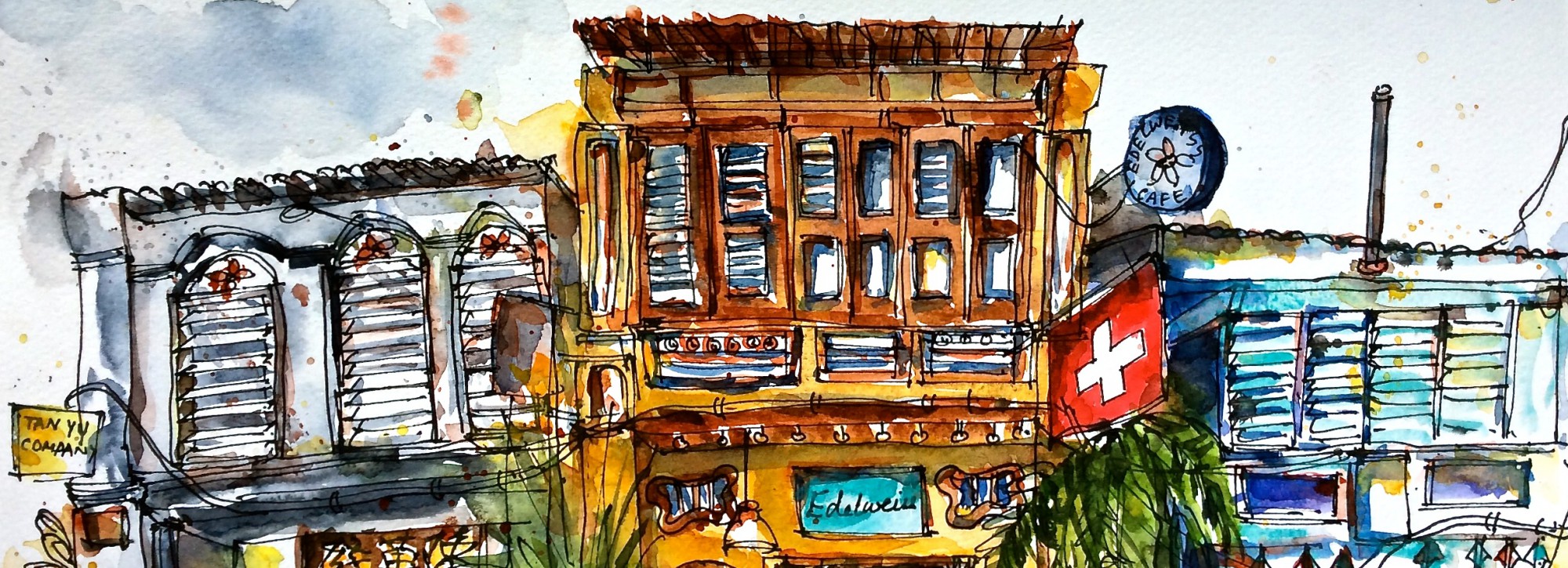
Coffee in a historic shophouse, anyone?

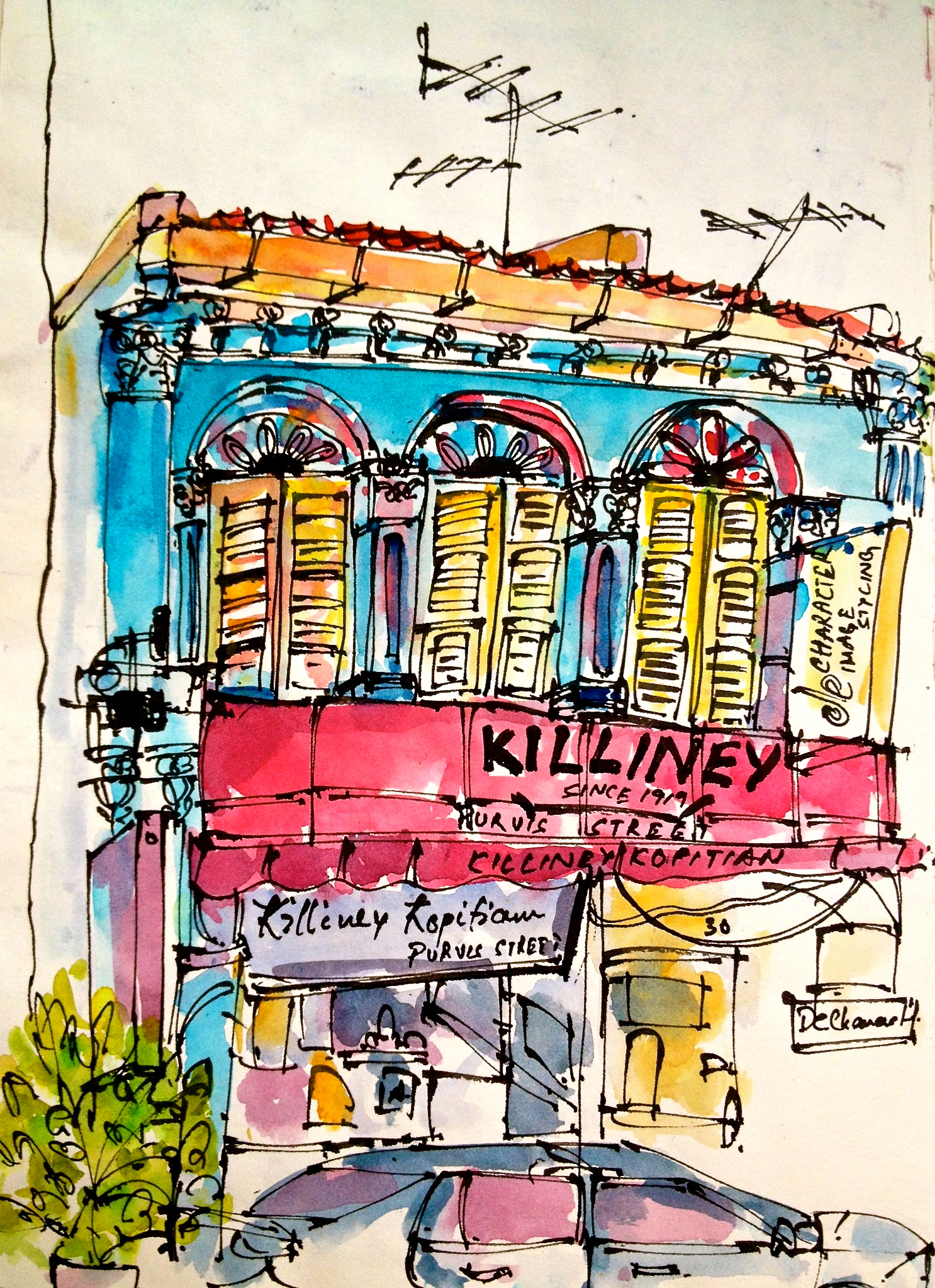
Killiney Kopitiam

An artist’s impression of Killiney Kopitiam

Singapore is not all high-rises and glitzy malls. Occasionally, just like a mirage in a abounding desert, a series of pre war shop houses loom up on a side street which you would’ve missed, had you blinked twice. Beautifully restored, these historic gems seem stuck in time with their wide arches, thick columns, colourful louvered windows and ornate motifs.

Most of these are now homes to pricy restaurants, artisanal cafes, bars, patisseries, art galleries, designer boutiques and such, presumably for a clientele with aesthetic tastes and deep pockets. Therefore, paying little over a dollar for a cup of joe, while lounging inside one of these timeless spaces, seemed like an inexpensive way of experiencing history and local culture.

Couple of days ago, on my way back from the Singapore National library, I spotted a brick red awning that says ‘Killiney Kopitiam on Purvis Street; Established in 1919’, in the same breath. Kopitiams ( Kopi for coffee and tiam for shop) are traditional coffee shops, very popular in Southeast Asia, that serve simple meals like egg, toasts along with coffee and tea.

Something about this place, perhaps the convivial banter of families, animated conversations between friends and the murmur of hunched retirees cross-leggedly poised on wooden stools on the patio, sent a message that it’s okay to walk in without hurting your wallet.

Alice ushering guests in with a smile

Alice ushering guests in with a smile

Its spartan interiors look like a canteen from the 80s. The walls are white and bare saving few signboards with Killiney’s history, a photograph of its flagship store and few items from the menu. Handful of bright tube lights light the mosaic floor; ceiling fans creak above dark wooden tables with emerald green tops and round stools, making for a simple, unpretentious homely setting, where you are almost tempted to put your feet up and holler your mother for a cup of coffee.

Coffee inside a shophouse

Coffee inside a shophouse

“Don’t let your food get cold. You should eat quickly”, booms a matronly voice into my ear before trailing off to another table. Meet Alice Tan, the 70 year old aunt of Killiney’s owner who has lived her entire life on Purvis Street,  and has been at its helm for 12 years, right from day one.

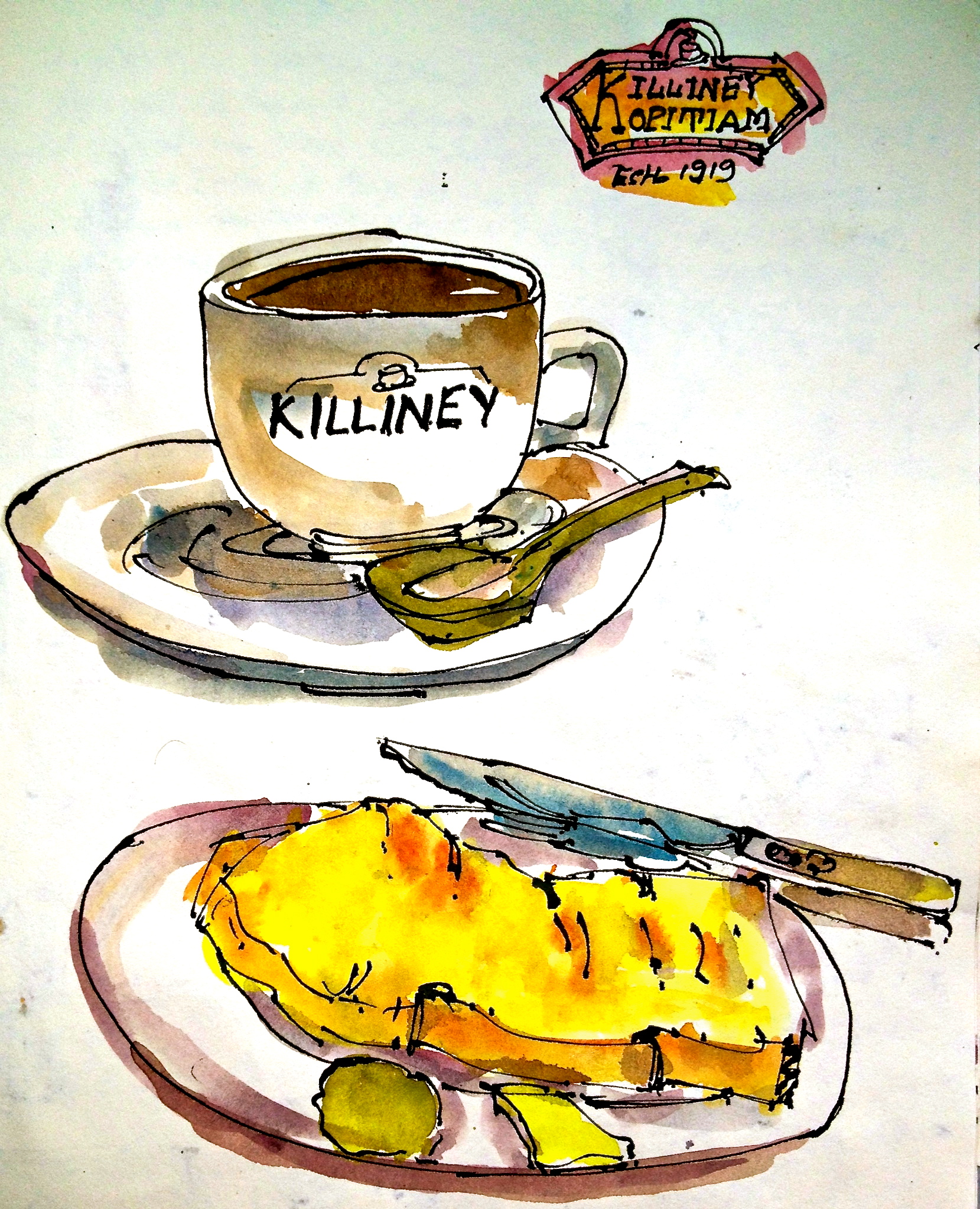
Kopi O and a French toast served with kaya and butter

Kopi O and a French toast served with kaya and butter

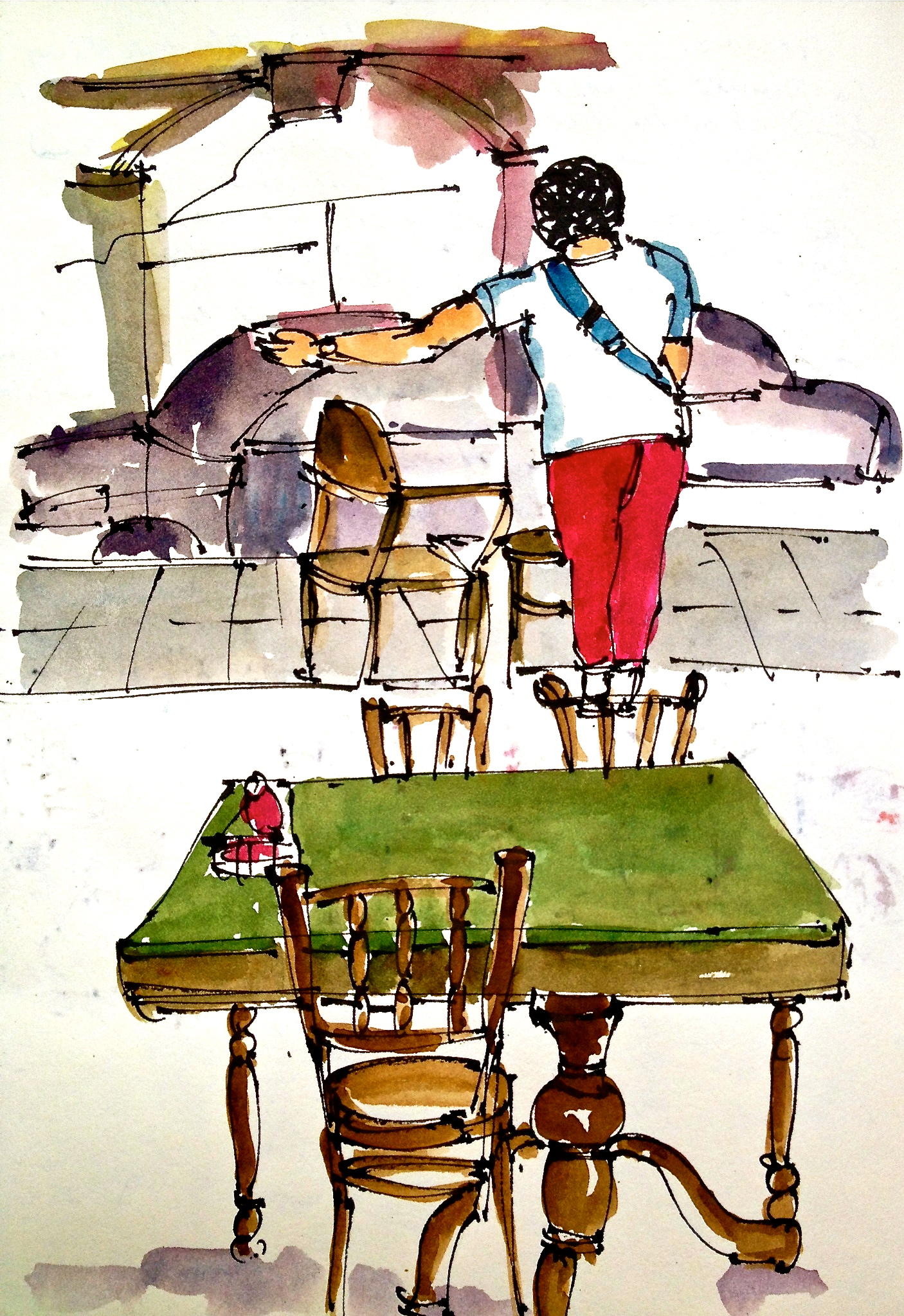
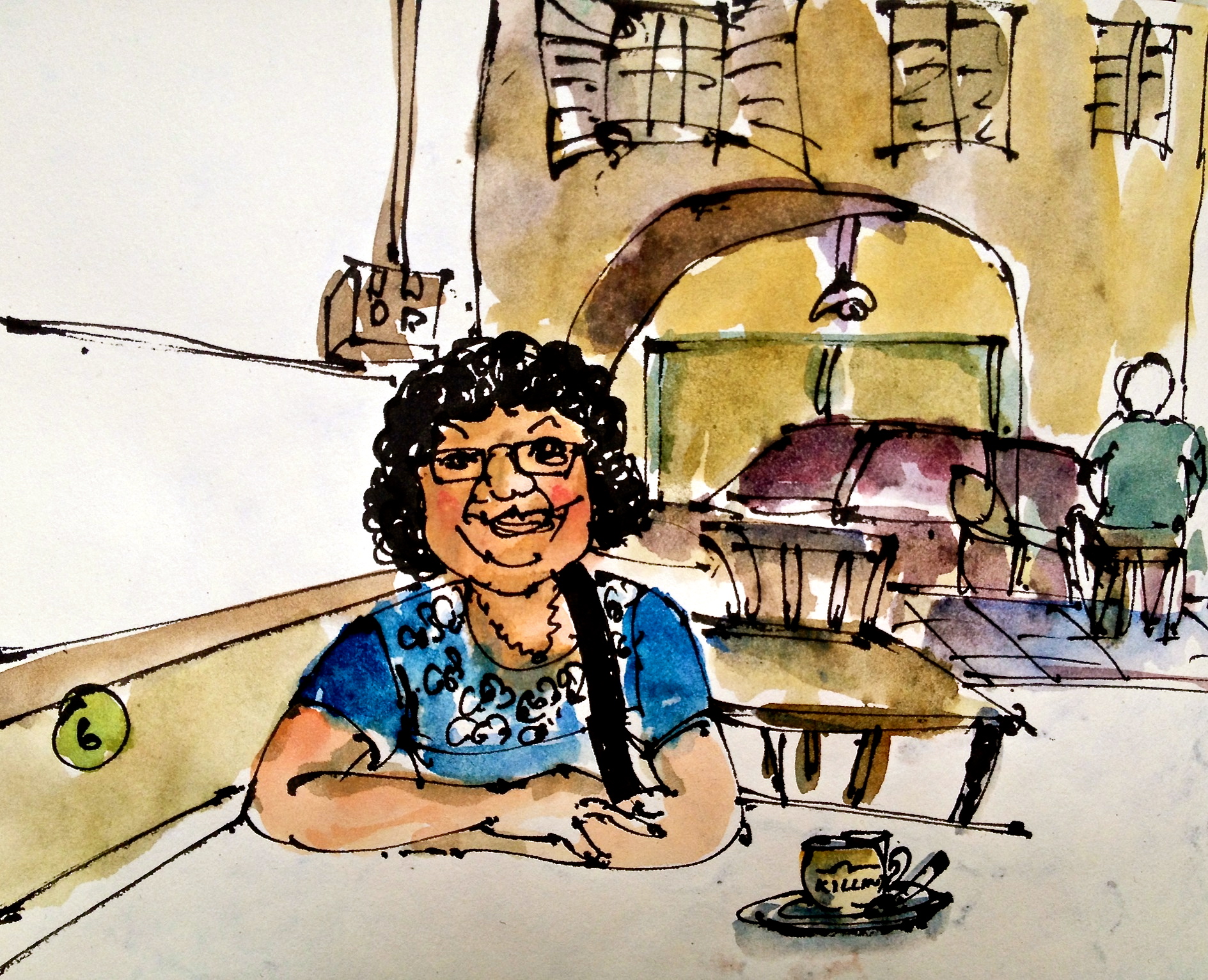
The warm reprimand gets me back to my half eaten french toast. I spread a layer of butter and kaya served alongside and wash it down with the Kopi O – sweetened black coffee – from an impersonal white melamine cup. Clad in bright pink trousers and a laced shirt with a satchel slapped across her shoulders, short haired, round faced Alice has the agility of someone half her age. “When I say I am 70, the kids laugh. They say – Auntie don’t bluff ah!” she says animatedly, pointing towards some of her younger patrons. ‘Now they call me “Amah“, used to address older people, you know’.

Alice chatting away with me

Chatting away with Alice

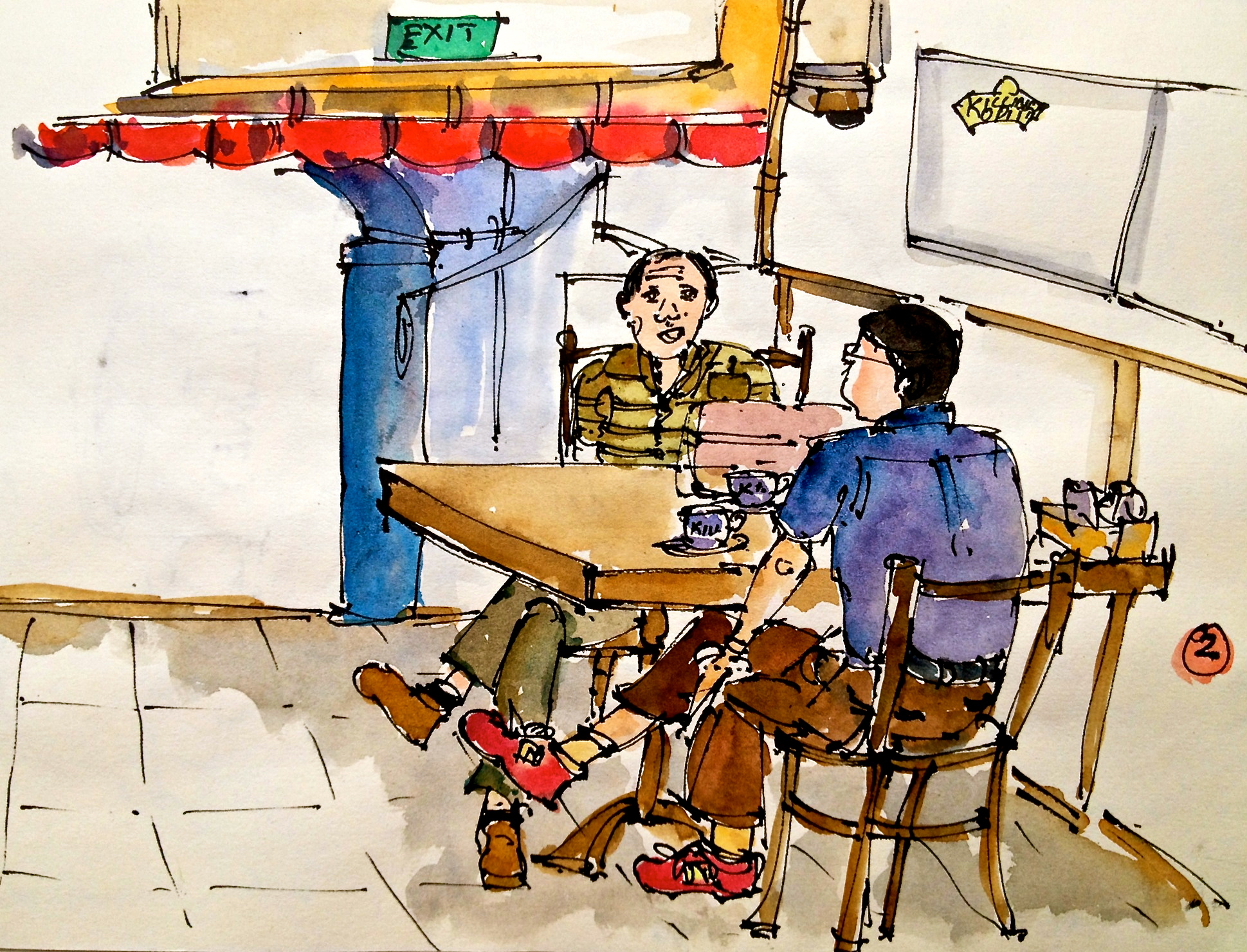
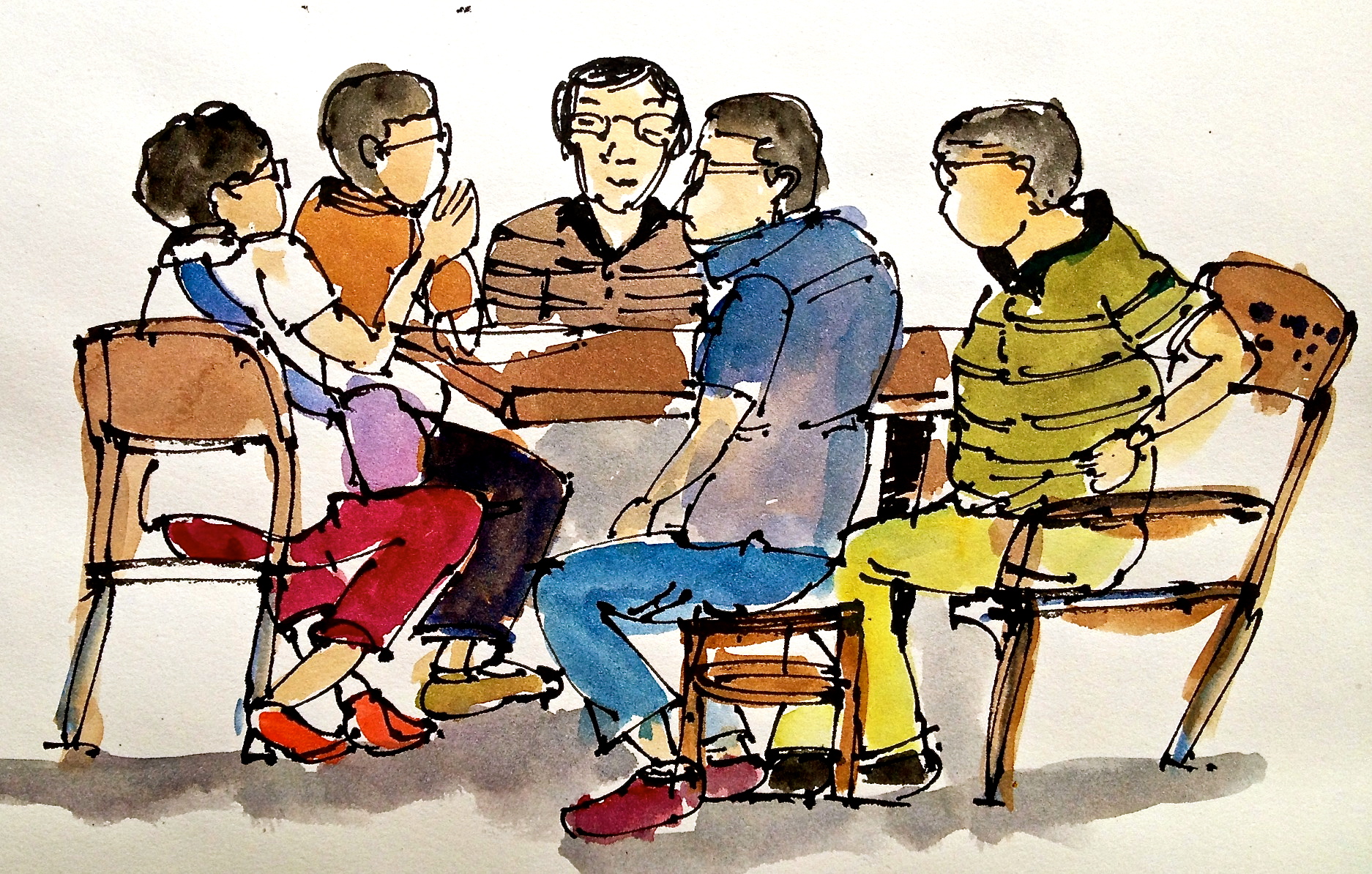
Alice is the soul of this kopitiam that flitters about like a butterfly on a roll. One moment she rushes inside the kitchen, the next she is out, patiently resolving a staff issue before joining in the camaraderie of her patrons at a nearby table, graciously slipping off to another and asking a lone woman who just walked in about her day at the office. Nothing escapes her hawk-eyed vision and overflowing warmth. Glancing over a charming group of silver haired patrons, she says, “You see, those are Purvis Street boys, who grew up here and have been visiting my shop since it opened. These days they meet for Kopi every Monday.” They wave at me and I wave back.

Alice and the Purvis Street boys

Alice in pink and the Purvis Street boys

It seems she knows everybody, and everybody knows everybody or wants to know everybody. I am constantly greeted by patrons passing by me, with a smile, a nod that segues into short conversations. With a Starbucks loyalty card snugly tucked in my wallet, I am already bemused at the difference in scene and my experience over a simple cup of coffee or rather Kopi.

But if the modern coffee chains come with all the fancy stuff like air conditioning, plush seating, Wi-Fi and charging points, what makes such no-frill joints tick, I wonder aloud. “Personal attention”, says Alice. “I am friends with anybody who walks through that door, black or white; Indian, Chinese or Malay”. While I take a long sip of my coffee, she adds with a beaming smile, ” And now you are my friend”.

I gobble up the rest of my food and order a tall glass of lime juice to beat Singapore’s sultry weather. The Purvis Street boys are getting ready to leave and so is Alice. They wave at me and smile gleefully through their wrinkles. “Hey girl!” one calls out. I look up from my drink. ” Come back on Monday.” Maybe I will.